
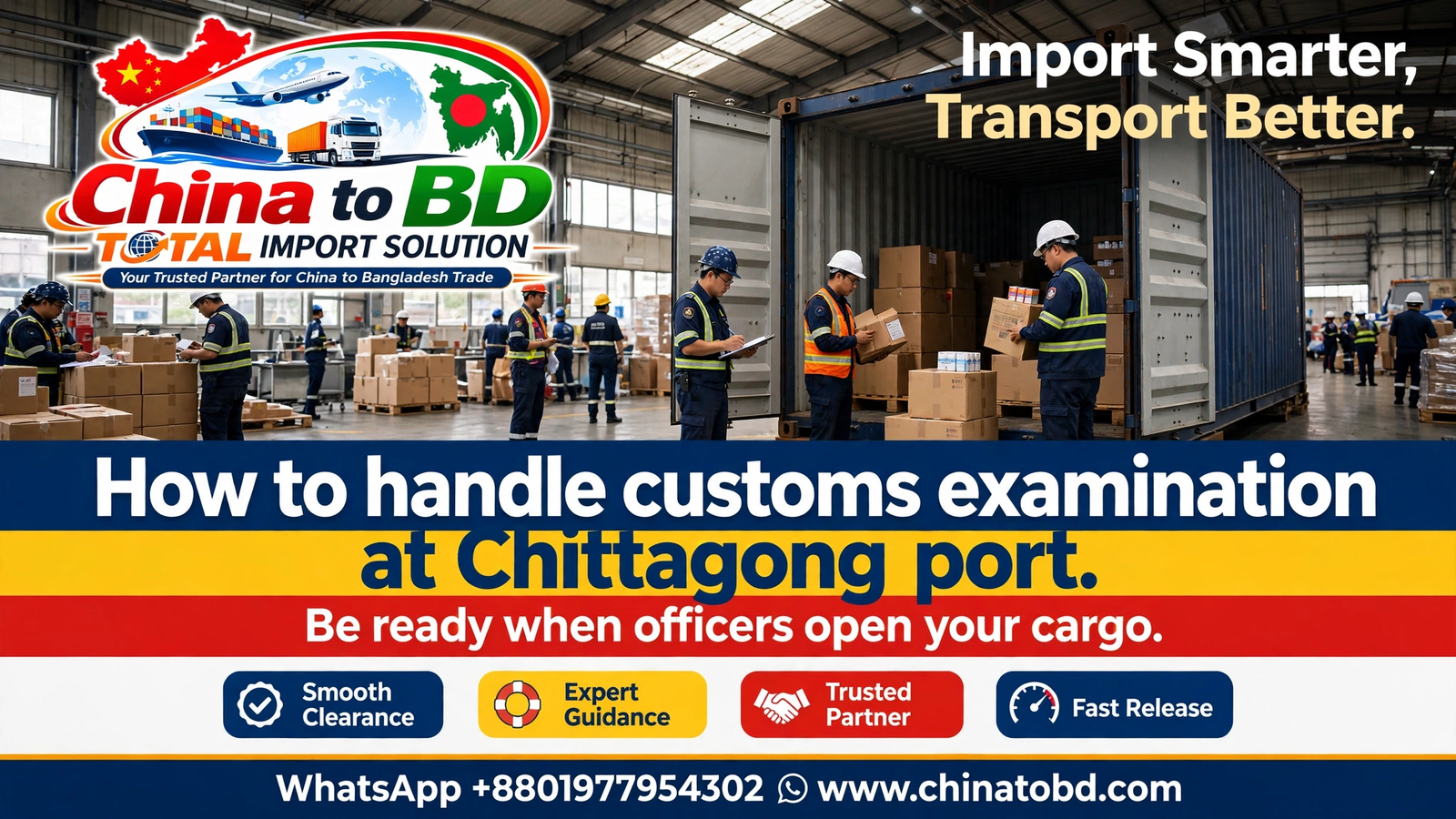
How to handle customs examination at Chittagong port
How to handle customs examination at Chittagong port
A container that arrives at Chittagong port may be released on the papers alone, or it may be selected for customs examination, which is a physical check of the goods against the documents. For an importer, the examination is not a problem in itself; it is a normal part of customs control, and a shipment that is prepared for it will pass through it without trouble. The problems begin when the importer has no plan for an examination, no papers ready, and no one at the port to attend it, because the container then waits while the plan is made. Customs examination means that the customs office opens the container, or asks for the goods to be presented, and compares what is inside with what the invoice, the packing list, and the bill of lading describe. The office checks the description, the quantity, the marks, and the condition of the goods, and records what it finds. If the goods agree with the papers, the examination is closed and the clearance proceeds. If they do not agree, the office will ask questions, and the importer must answer them with the papers and the records from the shipment file. China to BD | Total Import Solution has supported importers from China to Bangladesh since 2016, with sourcing, shipping, customs handling, warehousing, and delivery. This article explains, in practical steps, how to handle a customs examination at Chittagong port: what the examination is, why a container is selected, who attends and what they do, which papers to have ready, the steps to follow when a container is called, what happens during the physical check, and what to do after the release. For help, call +8801977954302, email info@chinatobd.com, or visit www.chinatobd.com. The warehouse and office are at House 38A, Mendi Dental College Road, Road 11, Dhanmondi Riverview Model Town, Dhaka 1209.
What Customs Examination Means at Chittagong Port
Customs examination at Chittagong port is the physical verification of imported goods by the customs office. The container is brought to the examination area, the seal is checked against the documents, the doors are opened in the presence of the customs officer and the importer's representative, and the goods are checked against the invoice and the packing list. The officer may count the packages, open a sample of the cartons, check the marks and the labels, and note the condition of the goods. The findings are recorded, and the record becomes part of the customs file for the shipment.
Examination is one of two ways a shipment is cleared. In the first way, the papers are checked and the goods are released without opening the container. In the second way, the papers are checked and the goods are also checked physically before release. Which way applies to a shipment is decided by the customs office, and the importer cannot choose it. The importer's task is to be ready for either way, so that the clearance proceeds in the same order whichever way is decided.
For the importer, the practical meaning is that the goods, the papers, and the people must all be ready at the same time. The goods must be packed so that they can be opened and repacked without damage. The papers must be complete and must agree with each other. The customs broker must be named, the representative who will attend must be known, and the labour and the equipment for opening and repacking must be arranged. A shipment that is ready in all three ways will pass an examination without delay; a shipment that is ready in only one or two ways will wait.
Why a Container Is Selected for Examination
A container is selected for examination for reasons that the customs office decides from the papers and from its own risk checks. A new importer, a new supplier, a new kind of goods, or a description that is unclear can each lead to a selection, because the office has no earlier record of the importer or the goods to rely on. A difference between the papers, such as a quantity on the invoice that does not match the packing list, can also lead to a selection, because the office must resolve the difference by looking at the goods themselves.
Selection is not a finding of wrongdoing. It is a check, and a shipment that agrees with its papers will pass it. An importer who treats a selection as a problem will spend the examination arguing about the selection instead of answering the officer's questions. An importer who treats it as a normal step will have the papers ready, will attend with the broker, will answer each question from the file, and will let the officer complete the check. The attitude of the importer at the examination matters, because the officer is recording what is found, and a clear, complete file makes the record simple to write.
The importer can reduce the chance of delay, even if the selection itself cannot be avoided, by keeping the papers in agreement. The description of the goods should be the same on the invoice, the packing list, and the bill of lading. The quantities should be the same on every paper. The marks on the cartons should match the packing list. The seal number should be recorded at loading and checked on arrival. Each of these checks removes a question the officer might otherwise have to ask, and a file with no open questions is a file that moves quickly.
| Reason for selection | What the office checks | How the importer prepares |
|---|---|---|
| New importer or new supplier | Papers and goods agree | Full document set, broker named |
| New kind of goods | Description matches the goods | Full description on every paper |
| Difference between papers | Which paper is correct | Papers checked against each other before arrival |
| Marks or labels unclear | Cartons match the packing list | Marks agreed with the supplier, labels checked |
| Risk check by the office | Goods, quantity, condition | Goods packed for opening and repacking |
Who Attends the Examination and What They Do
The customs broker is the person who prepares the customs file and presents it to the office, and the broker should attend the examination with the importer or the importer's representative. The broker knows which papers the office will ask for, in which order, and in which form, and can answer the officer's questions about the file. The importer should name the broker before the vessel arrives, share the full document set with the broker, and agree with the broker who will attend the examination and at what time.
The importer's representative is the person who can answer questions about the goods: what they are, how they are packed, how many there are, and where they are going. The representative should hold a letter from the importer authorising attendance, and should carry the shipment file, or a copy of it, with the invoice, the packing list, the bill of lading, the certificates, and the loading photographs. The representative should also carry identification, because the port will ask for it before allowing entry to the examination area.
The customs officer conducts the examination, records the findings, and decides whether the clearance can proceed. The officer may ask for a carton to be opened, a package to be counted, or a label to be read, and the importer should provide the labour and the equipment to do so without delay. The shipping agent or the transport team may also attend, because the container must be moved to the examination area and, after the examination, to the transport. Each person has a task, and the importer should agree the tasks with each of them before the vessel arrives.
| Person | Task at the examination | What to carry or arrange |
|---|---|---|
| Customs broker | Presents the file, answers questions on the papers | Full document set, duty papers |
| Importer or representative | Answers questions on the goods | Authorisation letter, shipment file, identification |
| Customs officer | Checks the goods, records the findings | Access to the container and the goods |
| Labour team | Opens, counts, repacks the cartons | Labour, tools, packing material |
| Transport team | Moves the container to and from the area | Truck, driver, route, timing |
Documents to Have Ready for the Examination
The document set for an examination is the full set for the shipment, with nothing missing and nothing out of date. The commercial invoice, the packing list, and the bill of lading are the papers the officer will read first, and they must agree with each other on the consignee name, the description of the goods, the quantities, and the package count. The certificate of origin, where required, and any product certificate for the exact goods should be in the file, with the goods named on the certificate matching the goods on the invoice.
The registration papers should also be in the file: the trade license, the BIN certificate, and the import registration certificate, each current and each showing the same name and address. The bank papers, including the letter of credit or the payment instruction and the bank's receipt, should be in the file, because the officer may ask how the goods were paid for. The loading photographs from China, showing the goods, the packing, and the seal, should be in the file, because they are the record of the goods as they were loaded, and they can answer a question about the condition or the packing of the goods.
Each paper should be checked before the vessel arrives, not on the day of the examination. The importer should sit with the broker before arrival, go through the file paper by paper, and note any paper that is missing or any difference between papers. A difference found before arrival can be corrected with a message to the supplier or the carrier; a difference found at the examination must be explained to the officer while the container waits. The file should be kept in one folder, with the papers in the order the officer will ask for them.
Steps to Follow When Your Container Is Called
When a container is called for examination, the importer should follow a fixed order, and should not improvise. The broker will inform the importer that the container has been selected, and will state the time and the place of the examination. The importer should confirm the attendance, gather the file, and arrange the labour and the transport. The container should be moved to the examination area, the seal checked against the documents, and the doors opened in the presence of the officer and the representative. The goods should be checked, counted, and repacked, and the findings recorded before the container leaves the area.
- Receive the notice from the broker, with the time and the place of the examination, and confirm the attendance in writing.
- Gather the shipment file: invoice, packing list, bill of lading, certificates, registration papers, bank papers, and loading photographs.
- Confirm the representative who will attend, with the authorisation letter and identification ready.
- Arrange the labour and the equipment for opening, counting, and repacking, and the packing material for any carton that must be resealed.
- Confirm the transport for moving the container to the examination area and, after the examination, to the delivery point.
- On arrival at the examination area, check the seal number against the bill of lading before the doors are opened.
- Open the container in the presence of the officer and the representative, and present the goods as the officer asks.
- Answer each question from the file, count the packages as the officer asks, and note the findings before the container is closed.
- Repack the cartons that were opened, reseal them as the officer directs, and confirm the release and the next step with the broker.
What Happens During a Physical Examination
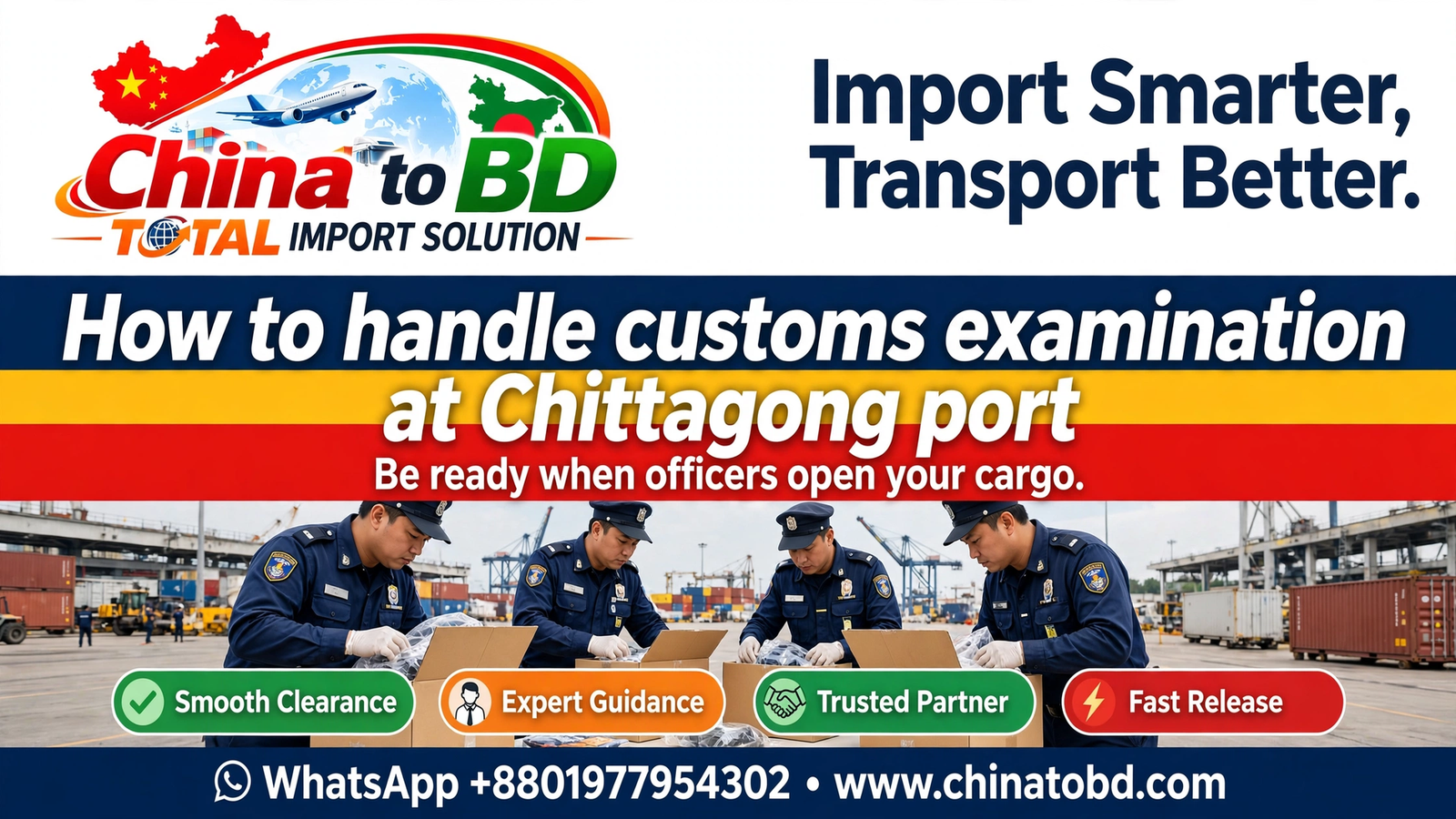
During a physical examination, the officer compares the goods inside the container with the goods described on the papers. The officer may count the total number of packages and compare it with the packing list. The officer may open a sample of the cartons and check the contents against the description, the marks, and the labels. The officer may check the condition of the goods, noting any damage, and may ask the representative about any item that looks different from its description. Each check is recorded, and the record is signed by the officer and, where the office requires it, by the representative.
The importer should let the officer lead the examination. The representative should answer the questions that are asked, from the file, and should not volunteer papers that have not been asked for, because an extra paper that does not agree with the file creates a new question. If the officer asks for a paper that is not in the file, the representative should say so plainly and ask the broker to obtain it, rather than guessing at the answer. If the officer finds a difference, the representative should note the difference, with a photograph, and ask the broker how it should be answered.
The goods should be packed so that the examination can be completed without damage. Cartons should be strong enough to be opened and resealed, and the goods inside should be packed so that a sample can be taken out and put back without harm. Packing material, tape, and labels should be ready at the examination, so that an opened carton can be resealed at once. A carton that cannot be resealed is a carton whose goods must be repacked, and repacking at the port takes time that the shipment does not have.
After the Examination: Release and Delivery
After the examination is completed, the officer records the findings and the clearance proceeds. The broker confirms the release with the importer, and the importer confirms the transport and the delivery plan. The container is moved from the examination area to the transport, and the goods are carried to the warehouse in Dhaka, where they are received, counted against the packing list, and checked for condition. The count at the warehouse should be compared with the count recorded at the examination, because any difference between the two counts must be noted at once.
The delivery should follow the plan that was agreed before the vessel arrived: the vehicle, the driver, the route, the delivery address, and the delivery time, with the receiver ready to count the goods on arrival. Where the site cannot take the whole load at once, the delivery should be split into sessions, with each session counted and receipted separately. The delivery receipt, signed and recorded, closes the chain, and the shipment file is then complete, with the examination record filed alongside the other papers.
The article Safe, secure cargo shipping from China to Bangladesh describes how a shipment is planned for safe and secure movement, and its guidance on checking the seal, counting the goods, and keeping one shipment file applies after an examination as well, because the examination record becomes part of the file that proves what was received. The article Breakbulk Shipping from China to Bangladesh describes a shipment method for goods that do not fit a standard container, and its guidance on planning the handling in advance applies to an examination too, because the handling must be planned before the container is opened.
Delays, Re-examination, and Keeping Records
A delay after an examination is usually caused by a paper that was missing, a difference between papers that was not resolved, or a duty matter that was not arranged. The importer should ask the broker, in writing, what is needed to complete the clearance, and should obtain the paper or the payment that is asked for without delay. The broker should be asked to state the requirement plainly, so that the importer can answer it once, correctly, rather than answering it in part and being asked again. Each answer should be recorded in the file, with the date and the name of the person who gave it.
A re-examination may be ordered if the first examination leaves a question open, or if a paper is corrected after the first check. The importer should treat a re-examination in the same way as the first: the same file, the same representative, the same labour and equipment, and the same order of steps. The record of the first examination should be in the file, because the second examination will be read against it, and a difference between the two records will raise a new question. The importer should not alter the record of the first examination; if a finding is disputed, the dispute should be raised through the broker, in writing.
Record keeping after an examination is the habit that protects the next shipment. The examination record, the count, the photographs, and the release note should be filed with the shipment file, and the lessons should be noted on the checklist: which paper was asked for, which question was raised, and which check should be added to the list for the next order. A first shipment that passes an examination with a complete file is a shipment whose importer has learned, in one day, what the customs office expects from every shipment that follows.
- Keep the examination record, the count, and the photographs in the shipment file.
- Ask the broker in writing what is needed if the clearance is delayed, and answer it once, correctly.
- Do not alter the record of an examination; raise a dispute through the broker, in writing.
- Treat a re-examination like the first: same file, same representative, same order of steps.
- Note the lessons of the examination on the checklist for the next order.
- Check the warehouse count against the examination count, and note any difference at once.
Checklist for Customs Examination
Copy this table into the shipment file and mark each item as it is completed. Complete the preparation items before the vessel arrives, so that the examination can be handled on the day it is called.
| Check | When | Done |
|---|---|---|
| Customs broker named, full document set shared | Before arrival | |
| Invoice, packing list, and bill of lading checked against each other | Before arrival | |
| Certificate of origin and product certificates in the file | Before arrival | |
| Registration papers current: trade license, BIN, import registration | Before arrival | |
| Bank papers in the file: letter of credit or payment instruction | Before arrival | |
| Loading photographs in the file, seal number recorded | Before arrival | |
| Representative named, authorisation letter and identification ready | Before arrival | |
| Labour and equipment arranged for opening, counting, repacking | Before arrival | |
| Packing material, tape, and labels ready for resealing cartons | Before arrival | |
| Transport confirmed for the examination area and the delivery | Before arrival | |
| Seal number checked against the bill of lading before opening | At examination | |
| Goods counted and checked as the officer asks, findings noted | At examination | |
| Opened cartons resealed, release confirmed with the broker | At examination | |
| Warehouse count compared with the examination count | At delivery | |
| Examination record filed, lessons noted on the checklist | After delivery | |
| Delivery receipt signed and recorded, file closed | After delivery |
Frequently Asked Questions
Q1: What is a customs examination at Chittagong port?
A customs examination is a physical check of imported goods by the customs office at Chittagong port. The container is brought to the examination area, the seal is checked against the documents, the doors are opened in the presence of the officer and the importer's representative, and the goods are compared with the invoice and the packing list.
Q2: Why is a container selected for customs examination?
A container is selected for reasons the customs office decides from the papers and its own risk checks, such as a new importer, a new supplier, a new kind of goods, an unclear description, or a difference between the papers. Selection is a check, not a finding of wrongdoing, and a shipment that agrees with its papers will pass it.
Q3: Who should attend a customs examination?
The customs broker should attend with the importer or the importer's representative. The broker presents the customs file and answers questions on the papers, while the representative answers questions on the goods. The representative should carry an authorisation letter, the shipment file, and identification.
Q4: Which documents should I have ready for an examination?
Have the commercial invoice, the packing list, the bill of lading, the certificate of origin where required, and any product certificate for the exact goods, plus the trade license, the BIN certificate, the import registration certificate, the bank papers, and the loading photographs from China, all checked against each other before arrival.
Q5: What happens if the goods do not match the papers at the examination?
If the goods do not match the papers, the officer will record the difference and ask questions, and the importer must answer through the broker with the papers and the records from the shipment file. The difference should be noted with a photograph, and the broker will state what correction or paper the office requires before the clearance can proceed.
Q6: How should goods be packed for a possible examination?
Goods should be packed in cartons strong enough to be opened and resealed, with the contents packed so that a sample can be taken out and put back without harm. Packing material, tape, and labels should be ready at the examination, so that an opened carton can be resealed at once and the goods protected for the journey to Dhaka.
Q7: What is the seal number and why is it checked at the examination?
The seal number is the number of the seal fixed on the container door at loading. It links the container to the documents, so the seal is checked against the bill of lading before the doors are opened. If the number does not match, the difference should be recorded with a photograph before opening, and the broker should be told at once.
Q8: How long does a customs examination take?
The time depends on the size of the shipment, the number of packages to be counted, and whether the papers agree with the goods. A shipment with a complete file, a named representative, and labour and equipment ready will be examined in the order the officer sets, while a shipment with missing papers or unready labour will wait while the gaps are filled.
Q9: Can I avoid a customs examination?
No, the importer cannot choose whether a container is examined, because the decision is made by the customs office from the papers and its own risk checks. What the importer can do is keep the papers in agreement, pack the goods for opening and repacking, and have the broker, the representative, and the labour ready, so that an examination causes no delay.
Q10: What should the representative do during the examination?
The representative should answer the questions the officer asks, from the shipment file, and should let the officer lead the examination. If a paper is asked for that is not in the file, the representative should say so plainly and ask the broker to obtain it, rather than guessing at the answer. The findings should be noted before the container is closed.
Q11: What happens after the examination is finished?
After the examination, the officer records the findings and the clearance proceeds. The broker confirms the release, the container is moved to the transport, and the goods are carried to the warehouse in Dhaka, where they are received, counted against the packing list, and checked for condition before delivery.
Q12: What should I do if the clearance is delayed after the examination?
Ask the broker in writing what is needed to complete the clearance, and obtain the paper or the payment that is asked for without delay. The broker should state the requirement plainly, so that the importer can answer it once, correctly. Each answer should be recorded in the file, with the date and the name of the person who gave it.
Q13: What is a re-examination and when does it happen?
A re-examination may be ordered if the first examination leaves a question open, or if a paper is corrected after the first check. It should be handled like the first examination, with the same file, the same representative, and the same order of steps, and the record of the first examination should be in the file, because the second examination will be read against it.
Q14: Should I take photographs during the examination?
Yes, photographs of the opened container, the cartons, and any difference that is found should be taken and filed with the shipment file, with the date written on them. The photographs are the record of what the officer saw, and they support the count and the condition noted at the examination if a question arises later.
Q15: How do I prepare a first shipment for a possible examination?
Prepare a first shipment by keeping the papers in agreement, confirming the description and the quantities on every paper, agreeing the marks and labels with the supplier, recording the seal number at loading, naming the broker before arrival, and arranging the representative, the labour, and the transport before the vessel arrives.
Q16: How can China to BD | Total Import Solution help with customs examination at Chittagong port?
China to BD | Total Import Solution has supported importers from China to Bangladesh since 2016, with sourcing, shipping, customs handling, warehousing, and delivery. The team can check the document set before arrival, work with the customs broker on the examination plan, and follow the shipment from the port to delivery in Dhaka with one shipment file.
Contact China to BD | Total Import Solution
For a written plan and quotation for How to handle customs examination at Chittagong port, contact China to BD | Total Import Solution. Share the cargo list, the loading point in China, the delivery point in Bangladesh, and the delivery dates, so the plan can be based on the actual shipment.
- Brand: China to BD | Total Import Solution
- Company: Total Import Solution, since 2016
- Helpline: +8801977954302
- Email: info@chinatobd.com
- Website: www.chinatobd.com
- Warehouse & Office: House 38A, Mendi Dental College Road, Road 11, Dhanmondi Riverview Model Town, Dhaka 1209
Call the helpline at +8801977954302 or email info@chinatobd.com to discuss How to handle customs examination at Chittagong port, to confirm a plan from sourcing to delivery, or to check a document list before the vessel sails.
About the Author