

Flexible Payment Terms on Shipping Container Leasing
Flexible Payment Terms on Shipping Container Leasing
Leasing a shipping container for an import shipment from China to Bangladesh involves more than choosing a container and a loading date. It also involves agreeing how the leasing arrangement will be paid for, what the payment covers, when each part falls due, and what happens if plans change. Payment terms describe that agreement. When the terms are clear, written down, and understood by everyone involved, the shipment can move forward with fewer surprises. When the terms are vague, rushed, or left to a verbal understanding, questions can appear later at exactly the wrong moment, while goods are waiting to load or while a container is waiting to be returned.
This guide explains flexible payment terms on shipping container leasing in plain language. It covers what payment terms mean, which factors shape a payment structure, why the written terms deserve a careful read, which questions to ask before agreeing, which leasing term options importers commonly compare, which documents to check, how loading and handling planning connects to payment, which cost factors to confirm, which common mistakes to avoid, and which checks to complete before shipment. It is written for importers, traders, and supply-chain teams who want a calm, step-by-step way to compare offers and confirm every term in writing first. China to BD | Total Import Solution has supported importers moving goods from China to Bangladesh since 2016, and the Warehouse and Office address is House 38A, Mendi Dental College Road, Road 11, Dhanmondi Riverview Model Town, Dhaka 1209. Readers can use this guide alongside a written quotation and confirm each point with the leasing provider before any goods move.
What Payment Terms Mean in Container Leasing
Payment terms in container leasing are the agreed conditions that describe how the leasing arrangement is paid for. They cover the timing of payment, the length of the leasing period, any deposit or security arrangement, what is included in the agreed amount, and what happens if the container is kept for longer than planned, returned to a different point, or damaged during use. They also cover who is responsible for each charge, which documents confirm the agreement, and how a change to the plan is handled. A clear set of terms answers these points in writing so that the importer, the supplier, and the leasing provider share the same understanding.
Flexible payment terms, in this context, mean terms that can be shaped around the shipment rather than fixed in a single rigid pattern. Flexibility can relate to the timing of payment, the structure of the leasing period, the way a deposit is handled, or the way changes are treated. Flexibility does not mean vagueness. A flexible arrangement still needs to be written down, with each part named and agreed. The value of flexibility is that the terms can reflect the real shipment: the type of goods, the loading point, the volume of cargo, the time needed for loading and unloading, and the return point for the empty container. An importer who understands these links can ask better questions and compare offers on the same basis instead of comparing headline descriptions that hide different inclusions.
Payment terms sit beside the physical side of leasing. A container must be checked, loaded carefully, sealed, transported, unloaded, and returned in the agreed condition. Each of those steps can carry a charge, a responsibility, or a time limit, and the payment terms should show which of them are included and which are separate. For example, the terms should make clear whether handling at the loading point is included, whether storage at a depot is included, and what applies if the container stays out for longer than the agreed period. When these points are left unclear, the importer may learn about them only when an extra charge appears. Reading the terms early, asking for written confirmation, and keeping a copy of the agreed terms with the shipment file prevents that kind of surprise.
Payment Structure Factors to Review
A payment structure is made of several factors, and each factor deserves its own question. The table below lists the main factors to review, what to ask about each one, and why the answer matters. Use it as a checklist when comparing offers, and ask the provider to confirm each row in writing.
| Factor | What to ask | Why it matters |
|---|---|---|
| Timing | When is each part of the payment due, and what triggers it? | Timing affects cash flow and planning, so the due points should match the shipment plan. |
| Leasing period | How long is the agreed period, and how is it counted? | The period shapes the whole plan, so its start, end, and counting method should be clear. |
| Deposit or security | Is a deposit or security arrangement required, and how is it handled? | The handling of a deposit should be written down, including how it is returned. |
| What is included | Which charges and services are included, and which are separate? | A clear inclusion list lets the importer compare offers on the same basis. |
| Changes to the plan | What happens if loading dates change or the period needs to be extended? | Change rules should be known before the shipment, not discovered afterwards. |
| Return point | Where should the empty container be returned, and in what condition? | The return point and condition affect handling, transport, and closing the file. |
Review each factor in the order shown, and do not move on until the answer is clear. If a provider describes a factor in general words only, ask for the specific wording that will appear in the written agreement. If two offers describe the same factor differently, ask both providers to confirm the wording so the comparison is fair. A careful review at this stage takes time, but it is far easier than resolving a disagreement after the container has been loaded and the goods are in transit.
Why Reading the Terms Before You Agree Matters
Reading the payment terms before agreeing matters because the terms decide what the importer will be asked to pay, when it will be asked for, and what happens when the plan changes. An importer who reads the terms early can spot a missing point, ask for it to be added, and keep a written record of the answer. An importer who agrees first and reads later may find that a point was never covered, and by then the shipment may already be underway. The terms are not a formality. They are the working agreement for the shipment, and they deserve the same attention as the loading plan and the packing list.
A careful read also helps the importer plan the rest of the shipment. When the leasing period is known, the loading team can plan the loading date, the transport team can plan the delivery, and the warehouse team can plan the unloading and the return of the empty container. When the inclusion list is known, the importer can see which services still need to be arranged separately, such as handling at a depot or transport to a warehouse. When the change rules are known, the importer can decide how much room the plan needs and what to do if a supplier delay or a port delay affects the schedule. Readers who want to understand how extended use of a container is treated may also find it useful to read Zero Demurrage Shipping: Rent Containers for Extended Offloading, which explains extended offloading in general terms.
Questions to Ask Before Agreeing
Before agreeing to any leasing arrangement, ask the questions in the table below and record the answers in writing. A clear answer is specific, written down, and matched to the shipment. A vague answer is a sign to ask again, in different words, until the point is clear.
| Question to ask | What a clear answer covers |
|---|---|
| What does the agreed amount include? | A list of included charges and services, and a note of anything separate. |
| When is each payment due? | The trigger for each payment, described in words tied to the shipment plan. |
| How is the leasing period counted? | The start point, the end point, and how the period is measured. |
| What applies if the period needs to be extended? | The process for extension, who approves it, and how it is recorded. |
| Where is the empty container returned? | The agreed return point and the condition expected on return. |
| Which documents confirm the agreement? | The names of the documents and who provides each one. |
Keep the answers with the shipment file, together with the quotation, the packing list, and the loading plan. If anything changes after the agreement, ask for the change to be confirmed in writing and add it to the same file. A complete file protects everyone involved, because it shows what was agreed, when it was agreed, and who agreed it. It also makes the next shipment easier, since the importer can compare the new terms with the terms used before.
Leasing Term Options to Compare
Leasing term options differ in how the period is set, how payment is timed, and how changes are handled. Some options suit a single shipment with a fixed loading date. Others suit a regular flow of shipments where the importer needs room to adjust the plan. The table below describes the options in general terms. It does not recommend one option over another, because the right choice depends on the cargo, the route, the loading point, and the time needed at each end. Use the table to compare offers side by side, and ask each provider to confirm which option the quotation describes.
| Option | How it is usually structured | When importers ask about it |
|---|---|---|
| Fixed period option | A set leasing period agreed before loading, with a named start and end. | When loading and return dates are already planned. |
| Flexible period option | A period that allows adjustment under agreed conditions, confirmed in writing. | When loading dates may move or unloading needs more time. |
| Single shipment option | An arrangement tied to one shipment from loading to return. | When the importer needs a container for one defined movement. |
| Repeat shipment option | An arrangement that covers a series of shipments under agreed conditions. | When the importer moves goods on a regular basis. |
Compare the options by asking the same questions for each one. Ask what is included, when payment falls due, how the period is counted, what happens if the period needs to be extended, and where the empty container should be returned. Ask also who to contact if the plan changes, and how quickly a change can be confirmed in writing. The answers will show whether an option is truly flexible or only described as flexible, and whether the flexibility covers the points that matter for the shipment. A written comparison, kept with the quotations, makes the decision easier and gives the importer a record to refer back to if any question arises later.
A flexible arrangement should still name its limits. It should state how far the period can be adjusted, what process applies to a change, and what documents record the change. Flexibility without limits is hard to plan around, because no one knows where the arrangement ends. Ask for the limits in writing, in plain words, and check that they match the shipment plan. If the limits do not match the plan, ask whether a different option fits better, or whether the plan itself needs to be adjusted before loading.
Steps to Agree Payment Terms in Writing
Agreeing payment terms is a process, not a single message. Follow the steps below in order, and keep a written record at each step. Each step builds on the one before it, so a gap early in the process can cause confusion later.
- Ask for the terms in writing. Request a written quotation that names the leasing period, the timing of payment, any deposit or security arrangement, what is included, the return point, and the process for changes. Do not rely on a verbal summary alone.
- Compare what is included. Place the quotations side by side and compare the inclusion lists line by line. Note anything that is included in one offer and separate in another, and ask for written confirmation of each difference.
- Confirm the period and the return point. Check the start and end of the leasing period, how it is counted, where the empty container should be returned, and the condition expected on return. Confirm these points in writing before loading.
- Check the documents. Ask which documents confirm the agreement, who provides each one, and when each one will be issued. Check the documents against the quotation before the goods move, and keep copies in the shipment file.
After the four steps, read the whole agreement once more from start to finish. Check that the names, dates, loading point, and return point match the shipment plan, and that every answer given during the discussion appears in the written terms. If a point was promised in discussion but is missing from the written terms, ask for it to be added before agreeing. A complete written agreement, kept with the shipment file, is the best protection against misunderstanding, and it helps the loading team, the transport team, and the warehouse team work from the same plan.
Documents and Checks to Confirm Before Loading
Documents confirm what was agreed and give each party a record to work from. Before loading, confirm which documents will be issued, who issues each one, and when each one will be available. Ask for copies to be kept in the shipment file, and check that the details on each document match the quotation and the loading plan. If a document is missing or unclear, ask for it to be clarified in writing before the goods are loaded.
| Document or check | What to confirm | Who usually provides it |
|---|---|---|
| Written quotation | Period, timing, inclusions, return point, and change process are named. | Leasing provider |
| Leasing agreement | Terms match the quotation and the shipment plan. | Leasing provider |
| Container condition report | Container number, condition notes, and inspection notes are recorded. | Container provider or depot |
| Packing list | Product names, packing type, and carton count match the goods. | Supplier or importer |
| Loading plan | Loading point, loading order, and handling notes are agreed. | Supplier and loading team |
| Return instruction | Return point and expected condition are written down. | Leasing provider |
A document check is also a good time to confirm contact details. Make sure the loading team, the transport team, and the warehouse team all have the same contact numbers and the same written instructions. Make sure the leasing provider knows who to contact if the plan changes, and make sure the importer knows who to contact at the provider. Clear contacts, written instructions, and a complete shipment file turn a complicated movement into a series of steps that each team can follow without guessing.
Loading and Handling Planning
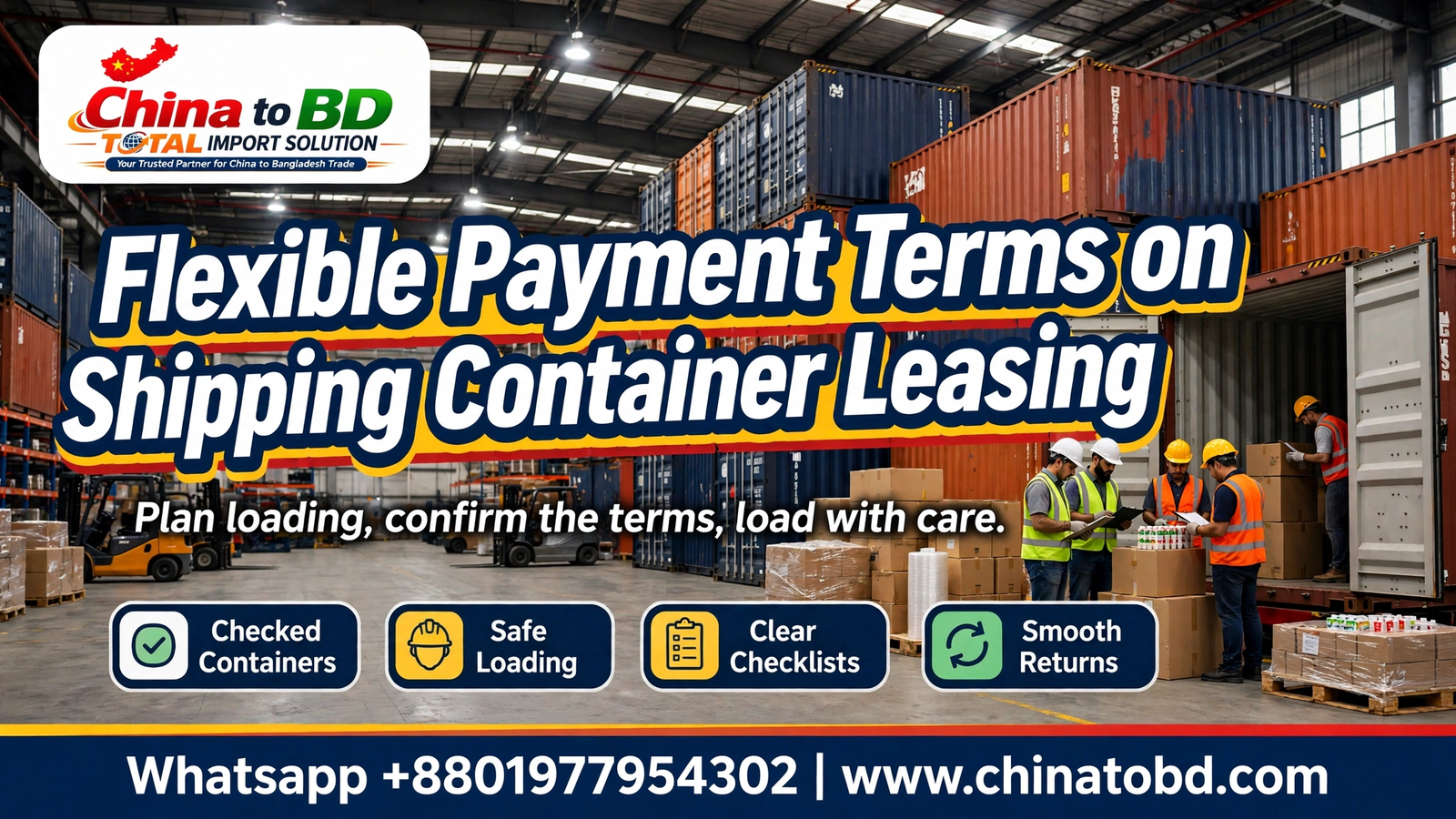
Loading and handling planning connects directly to payment terms, because the time needed for loading, transport, unloading, and return shapes the leasing period. A realistic plan starts with the goods themselves: what they are, how they are packed, how many cartons there are, and how they should be handled. It then considers the loading point, the equipment available there, the order in which goods should be loaded, and the time the team needs to load carefully without rushing. A plan that allows enough time for each step is easier to follow and less likely to need a change after loading has begun.
Handling at each stage deserves the same care. Goods should be lifted, moved, and stacked in the way the packing allows, with attention to weight distribution, stability, and protection from moisture and damage. The container floor should be clean and dry before loading, the doors should open and close freely, and the locking gear should work as expected. Photographs taken during loading, showing the cargo, the packing, and the condition of the container, give the importer a useful record. The loading team should also confirm the container number, the seal number, and the loading date in writing, and share those details with the importer and the transport team.
Planning should also cover the destination side. Before the container arrives in Bangladesh, confirm where it will be unloaded, who will handle the unloading, and where the empty container will be returned. Importers should confirm availability at Chittagong off-dock ICDs and Dhaka inland depots in general terms, asking the relevant depot or handling team what is available for the planned dates and what process applies, without assuming that a particular depot or a particular service will be available. The same care applies to the warehouse in Bangladesh: confirm the unloading space, the equipment, and the team before the container arrives, so that unloading can begin promptly and the empty container can be returned as planned. A destination plan that is confirmed in advance supports the leasing period and reduces the chance of a change after arrival.
Cost Factors to Confirm
Cost factors in container leasing are the elements that shape the total amount the importer will be asked to pay. They are not prices, and this guide names no prices. They are the points to confirm in writing so that the quotation can be compared fairly and the importer knows what is included and what is separate. Ask the provider to name each factor that applies to the shipment, and to confirm in writing whether it is included in the agreed amount or charged separately. Readers who want a broader view of import costs may also find it useful to read Cost of Importing from China, which discusses import costs in general terms.
- Leasing period. Ask how the period is counted and what applies if the period needs to be extended, so the time element of the arrangement is clear.
- Deposit or security handling. Ask whether a deposit or security arrangement applies, how it is held, and how it is returned when the container comes back in the agreed condition.
- Handling at the loading point. Ask whether loading, lifting, and handling at the loading point are included, and who provides the equipment and labour.
- Storage at a depot. Ask whether storage at a depot or yard is included, and what process applies if the container stays at the depot for longer than planned.
- Transport to the warehouse. Ask whether transport from the port or depot to the warehouse in Bangladesh is included, and who arranges it.
- Return of the empty container. Ask what the return involves, where the container should be taken, and what condition is expected on return.
- Cleaning and repair. Ask who is responsible for cleaning after unloading and what applies if the container needs repair after use.
Confirm each factor before agreeing, and keep the written answers with the quotation. If a factor is not mentioned in the quotation, ask about it directly rather than assuming it is included or excluded. A complete list of factors, confirmed in writing, lets the importer plan the budget for the shipment, compare offers on the same basis, and avoid a surprise when a separate charge appears. It also helps the importer brief the supplier, the loading team, and the warehouse team, because each team can see which services are covered and which still need to be arranged.
Common Mistakes to Avoid
Many problems in container leasing come from a small number of avoidable mistakes. The list below names the most common ones, so readers can check their own plan against each point before loading.
- Agreeing without written terms. Relying on a verbal summary leaves the period, the inclusions, and the change process open to misunderstanding. Ask for everything in writing.
- Comparing offers on headline words alone. Two offers can sound similar while including different services. Compare the inclusion lists line by line.
- Leaving the return point unclear. An unclear return point can cause delay and extra handling after unloading. Confirm the return point and the expected condition in writing.
- Planning loading without enough time. A rushed loading plan can lead to poor stowage, damage, and a change to the schedule. Allow enough time for careful loading.
- Skipping the container check. Loading without checking the container floor, roof, walls, doors, and seals can allow a defect to travel with the goods. Check the container in daylight before loading.
- Forgetting the destination plan. Arriving without a confirmed unloading point, handling team, and return plan can leave the container waiting. Confirm the destination plan before the shipment leaves China.
Pre-Shipment and Loading Checklist
Use the checklist below before the shipment leaves the loading point. Tick each row only when the point has been confirmed in writing or checked in person, and keep the completed checklist in the shipment file.
| Check | What to confirm | Status |
|---|---|---|
| Written terms received | Quotation and agreement name the period, timing, inclusions, and return point. | Confirmed in writing |
| Container checked | Floor, roof, walls, doors, seals, and locking gear checked in daylight. | Checked before loading |
| Packing list ready | Product names, packing type, and carton count match the goods. | Ready and shared |
| Loading plan agreed | Loading order, handling notes, and loading point agreed with the team. | Agreed in writing |
| Container and seal noted | Container number, seal number, and loading date recorded and shared. | Recorded |
| Destination confirmed | Unloading point, handling team, and return plan confirmed, including depot availability in general terms. | Confirmed |
| Contacts shared | Loading team, transport team, warehouse team, and provider contacts shared. | Shared in writing |
Frequently Asked Questions
Q1: Can payment terms for container leasing be flexible?
Yes, payment terms can often be shaped around the shipment, for example in how the timing is set, how the period is structured, or how changes are handled. Flexibility should still be written down, with each part named and agreed, so that everyone involved shares the same understanding of the arrangement.
Q2: What should I ask about first when comparing payment terms?
Ask what the agreed amount includes, when each payment falls due, how the leasing period is counted, and where the empty container should be returned. These four points shape the rest of the arrangement, so confirm them in writing before comparing other details.
Q3: Why should payment terms be confirmed in writing?
Written terms give every party the same record of what was agreed. They show the period, the timing, the inclusions, and the change process, and they help resolve questions quickly if the plan changes after loading.
Q4: What does the leasing period usually cover?
The leasing period usually covers the time from when the container is released for loading until it is returned in the agreed condition at the agreed point. Ask the provider to confirm the start, the end, and how the period is counted for the shipment.
Q5: Is a deposit or security arrangement always required?
Not always. Whether a deposit or security arrangement applies depends on the provider and the arrangement. Ask whether one applies, how it is handled, and how it is returned when the container comes back in the agreed condition.
Q6: What happens if loading dates change?
If loading dates change, the leasing period, the loading plan, and the return plan may all need to be adjusted. Ask the provider how a change is requested, who approves it, and how it is recorded in writing before the goods move.
Q7: What happens if the container needs to be kept for longer than planned?
Keeping a container for longer than the agreed period may affect the arrangement, so ask in advance what process applies, who should be contacted, and how the extension is confirmed in writing. Do not assume that extra time is covered.
Q8: Where should the empty container be returned?
The empty container should be returned to the point named in the written agreement, in the condition described there. Confirm the return point and the expected condition before loading, and keep the written instruction with the shipment file.
Q9: Should I confirm availability at depots in Bangladesh before arrival?
Yes. Confirm availability at Chittagong off-dock ICDs and Dhaka inland depots in general terms by asking the relevant depot or handling team what is available for the planned dates and what process applies. Do not assume that a particular depot or service will be available.
Q10: What documents should I receive before loading?
Ask for a written quotation, the leasing agreement, a container condition report, and a return instruction, and check that the details on each document match the shipment plan. Keep copies of all of them in the shipment file.
Q11: How do I compare two leasing offers fairly?
Compare the offers line by line using the same questions: what is included, when payment falls due, how the period is counted, what applies if the plan changes, and where the container is returned. Ask both providers to confirm each point in writing.
Q12: What should the packing list include?
The packing list should name the products, the packing type, and the carton count, and it should match the goods being loaded. Share it with the loading team, the transport team, and the warehouse team so everyone works from the same list.
Q13: Who should I contact if the plan changes during the shipment?
Contact the leasing provider using the contact details in the written agreement, and share the change with the loading team, the transport team, and the warehouse team. Ask for the change to be confirmed in writing and add it to the shipment file.
Q14: What should I check on the container before loading?
Check the floor, roof, walls, doors, seals, and locking gear in daylight, and record the container number and the condition notes. If anything is unclear or damaged, ask the provider about it before loading begins.
Q15: Can I get a written quotation before I agree to anything?
Yes. Ask for a written quotation that names the leasing period, the timing of payment, what is included, the return point, and the process for changes. Share the goods list with the provider so the quotation can reflect the real shipment.
Q16: How can China to BD | Total Import Solution help with my shipment?
China to BD | Total Import Solution supports importers moving goods from China to Bangladesh, and can discuss the shipment, the loading plan, and the written quotation. Share the goods list and the loading details, and confirm every term in writing before the goods move.
Contact China to BD | Total Import Solution
For a written quotation or for help planning a shipment, contact China to BD | Total Import Solution using the details below. Share the goods list, including product names, packing type, carton count, loading point, warehouse in Bangladesh, and loading dates, so the quotation can reflect the real shipment.
- Brand: China to BD | Total Import Solution
- Company: Total Import Solution, since 2016
- Helpline: +8801977954302
- Email: info@chinatobd.com
- Warehouse & Office: House 38A, Mendi Dental College Road, Road 11, Dhanmondi Riverview Model Town, Dhaka 1209
- Website: www.chinatobd.com
Get a Written Quotation for Your Shipment
To receive a written quotation for a shipment, contact the team and share the goods list. Include the product names, the packing type, the carton count, the loading point, the warehouse in Bangladesh, and the loading dates. The team will discuss the shipment, the loading plan, and the terms, and confirm the quotation in writing.
Chat on WhatsApp: +8801977954302
Flexible payment terms work best when they are clear, written down, and matched to the real shipment. Ask the questions in this guide, compare offers on the same basis, confirm the period and the return point, check the container before loading, and keep every written answer in the shipment file. A careful plan at the start makes the loading, the transport, the unloading, and the return of the empty container easier to manage, and it gives every team the same written plan to follow from China to Bangladesh.
About the Author