
Certified Seaworthy Cargo Containers for International Freight
Certified Seaworthy Cargo Containers for International Freight
International freight begins long before a vessel leaves the port. It begins with the steel box that carries the goods, the condition of that box, and the care taken before the doors are closed and sealed. A certified seaworthy cargo container is a container that has been checked, maintained and found fit for the sea journey ahead. For importers moving goods from China to Bangladesh, that check matters on every shipment, whether the cargo is machinery, textiles, household goods, electronics, furniture, raw materials or mixed commercial stock. The container protects the goods from sea spray, rain, wind, stacking pressure and the movement of the vessel. When the container is sound, the goods have a far better chance of arriving as they were loaded.
This guide explains what a seaworthy container is, how to check one before loading, how to choose the right container type, what documents and checks to prepare, how to plan loading and handling, what cost factors to confirm at booking, and which common mistakes to avoid. It does not promise a particular result for any single booking, because every shipment depends on the cargo, the route, the vessel, the port and the conditions on the day. What it offers is a disciplined way to reduce avoidable risk: look closely, ask questions, record what you find, and load only a container you are satisfied with. Use it alongside the advice of your freight forwarder, shipping line, surveyor and warehouse team, and confirm every booking detail in writing before the goods move.
What a Seaworthy Container Is
A seaworthy container is a shipping container that is structurally sound, weather-resistant and fit to be carried by sea. It is built to international container standards, it can be stacked with other containers, it can be lifted by crane and spreader, and it can be secured on a vessel or in a yard without bending, leaking or losing its shape. The word certified, in this context, refers to the container having passed the relevant inspection and approval process for its type and age, and carrying the plates, marks and records that show it has been examined. Certification is a check at a point in time. It is not a promise about future weather, port handling or the condition of the cargo inside, and it does not remove the need for a fresh visual inspection before every loading.
A standard dry container is made of corrugated steel walls, a steel or timber floor, a roof, corner castings, doors at one end and a locking system that holds those doors firmly shut. The walls and roof keep out water and wind. The floor carries the cargo and the forklift. The corner castings take the lifting and stacking loads. The doors, locking rods, handles and seals keep the container closed and show whether it has been opened after sealing. The CSC plate, short for the Convention for Safe Containers plate, is fixed to the container and records information about its approval, its maximum weight and its inspection history in general terms.
Seaworthiness is also about fitness for the particular cargo. A container that suits dry cartons may not suit cargo needing ventilation, temperature control or extra height. A container with a sound structure but a damaged floor may be unsuitable for heavy machinery. The question is not only whether the container is seaworthy in general, but whether this container, in this condition, is right for this cargo on this voyage.
Why Container Condition Matters on the China to Bangladesh Route
Goods moving from China to Bangladesh travel by sea, then pass through port handling, yard storage and road transport to the final destination. At each stage the container is lifted, stacked, moved and exposed to weather. A weak floor can flex under a forklift. A damaged door seal can let in rain during yard storage. A bent locking rod can leave a gap that admits moisture or dust. A corroded roof panel can drip water onto cartons during a long voyage. These are the ordinary consequences of a container that was not checked carefully before loading.
A poor container choice also costs time and money. A container rejected at the port, or changed after loading has started, can delay the shipment and require extra labour. A leaking container may require cargo to be unpacked, dried, repacked or inspected on arrival. A door that does not seal can raise questions at inspection and slow clearance.
How Certification and Inspection Work in General Terms
Certification and inspection are often mentioned together, but they are not the same thing. Certification refers to the approval of a container under the relevant container safety rules, shown by the plates and marks fixed to the unit. Inspection refers to the physical examination of that container at a point in time, whether at manufacture, at a scheduled examination, at the depot before release, or at the warehouse before loading.
Before loading, ask who inspected the container, when it was inspected, and what the inspection covered. Record the answers in writing, with the container number and the date of the check. If the provider cannot give that information, ask for another unit or arrange an independent visual check. The CSC plate is usually fixed near the doors. Read it, note the maximum gross weight it shows, and make sure the planned cargo weight stays within that limit, including pallets, dunnage and packing. A missing, damaged or unreadable plate is a reason to ask questions and, if needed, to request a different container. Never invent a plate number, a certificate number or an inspection date.
| Inspection stage | What to confirm | Who usually confirms it |
|---|---|---|
| Depot release | Clean, dry, sound; plate present and legible | Container provider or depot |
| Arrival at loading point | No new damage; doors open and close freely | Supplier, warehouse team or importer representative |
| Before loading | Floor, roof, walls, doors, seals, locking gear checked | Loading team with checklist |
| After loading | Doors locked, seal fitted and number recorded | Loading team and forwarder |
| At port and on arrival | Seal number matches documents; no visible damage | Port team, forwarder and receiver |
Choosing the Right Container Type
Choosing the right container type protects the cargo, makes loading easier, and avoids changing containers after work has started. Decide the type with the supplier and the freight forwarder before the goods are packed. A standard dry container suits most general cargo: cartons, palletised goods and manufactured products. A high cube container offers extra internal height for light, bulky goods. An open top container allows loading from above by crane. A flat rack suits cargo that cannot fit inside a closed box. A refrigerated container, often called a reefer, provides cooling and temperature monitoring.
Weight deserves special attention. Every container has a maximum gross weight shown on its CSC plate, and the cargo, pallets, dunnage and packing must stay within that limit. Overloading can damage the floor, make lifting unsafe, and cause problems at the port.
| Container type | Best suited for | Loading notes |
|---|---|---|
| Standard dry container | Cartons, palletised goods, general cargo | Load through rear doors; spread weight evenly |
| High cube container | Light, bulky cargo needing extra height | Check door and internal height before packing |
| Open top container | Tall or crane-loaded cargo | Load from above; cover and secure the top |
| Flat rack container | Heavy, long or wide cargo | Check lashing points and lifting plan first |
| Refrigerated container | Cargo needing temperature control | Confirm temperature setting and power supply |
| Ventilated container | Cargo needing airflow | Confirm ventilation settings and spacing |
Steps to Choose the Right Container
- List every item, with size, weight and packing type, before choosing a container.
- Measure the largest item against the door opening and internal size.
- Decide whether the cargo needs extra height, top loading, temperature control or ventilation.
- Ask the forwarder which types are available on the planned sailing.
- Confirm the type, size and any special equipment in writing, and share it with the supplier.
- Check the actual container against the booking when it arrives, before loading.
How to Check a Container’s Condition Before Loading
A careful check before loading is the single most valuable habit in container shipping. It takes little time, needs no special equipment, and prevents many problems that appear later. Do it in daylight, with the doors open, and with enough time to look at every part of the unit.
Walk around all four sides and look at the walls and roof, first from a distance and then close up. Look for dents, bends, rust, holes, patches and signs of repair. Then open and close each door fully and check that it moves freely on its hinges. Look at the door gaskets for completeness, flexibility and tears. Check the locking rods for straightness and firm fixing, and the handles for proper engagement. A door that is hard to open, hard to close or does not sit flat against the frame is a reason to pause.
Step inside with the doors open and let daylight enter. Look for light coming through holes or gaps in the walls and roof.
Checking the Floor
The floor carries the cargo and the forklift, so look at it closely. they should be firm, level and free of rot, holes and soft spots. Walk the full length and feel for movement, flexing or soft areas. A plank that moves, sinks or feels soft should be recorded and shown to the provider.
Checking the Roof, Walls and Doors
The roof and walls protect the cargo from rain, sea spray and wind. Close the doors and look at the gap between the door and the frame: it should be even, and the gasket should press firmly against the frame all the way around. A door that does not close evenly is a reason to pause and ask for advice before loading.
Checking Seals and Locking Gear
Seals and locking gear keep the container closed and show whether it has been opened after loading. The locking rods, handles, hasps and retainers should all be present, straight and working. If a handle is missing, bent or unable to lock, report the defect before loading. The seal is fitted after loading, and its number is recorded on the shipping documents. After loading, fit the seal, record its number, photograph it, and check the number against the documents.
Reading the CSC Plate in General Terms
The CSC plate is a small metal plate fixed to the container, usually near the doors. It records information about the container approval and its safe working limits, including the maximum gross weight. Check that it is present, firmly fixed and legible.
| Part to check | What a sound container looks like | What to record if it is not sound |
|---|---|---|
| Floor | Firm, level, clean, dry, no soft spots | Location and size of any soft area or stain |
| Roof | Straight, no deep dents, no holes | Location of any dent, rust patch or daylight |
| Walls | Straight panels, no holes, no sharp edges | Location of any dent, hole or damaged panel |
| Doors | Open and close freely, sit flat | Which door is stiff, bent or uneven |
| Door gaskets | Complete, flexible, no tears or gaps | Where the gasket is torn or missing |
| Locking rods and handles | Straight, turn smoothly, lock firmly | Which rod or handle is bent or loose |
| Seals and hasps | Present, sound, able to take a seal | Any missing or damaged hasp |
| CSC plate | Present, firmly fixed, legible | Whether the plate is missing or unreadable |
| Interior | Clean, dry, no odour, no debris | Any damp, smell, debris or light |
Documents and Checks to Prepare
Good documents record what was checked, what was loaded, and what was agreed, and they help every party work from the same information. Prepare them early and keep copies. The commercial invoice describes the goods, their value and the parties to the sale. The packing list describes the packing, the number of packages, and the weight and size of each package. The bill of lading or sea waybill is the transport document issued by the carrier, recording the container number, the seal number, the port of loading and the port of discharge. The certificate of origin, where required, states where the goods were made. Ask the forwarder and customs broker which documents apply, and prepare them in good time.
Also confirm the booking in writing: vessel and sailing date , ports, container type and quantity, free time at the port, . Free time matters because containers held beyond the allowed period can attract additional charges. Readers who want to understand how free time and container hire can affect a shipment can read Zero Demurrage Shipping: Rent Containers for Extended Offloading for a general explanation of demurrage and extended offloading.
Confirm customs and port procedures with the broker and forwarder before the vessel sails. Know which documents the broker needs, how the cargo will be cleared, and where the container will be unloaded. Availability at Chittagong off-dock ICDs and Dhaka inland depots should be confirmed in general terms with the forwarder or the depot operator before the shipment arrives, without assuming a particular depot will have space on a particular day.
| Document or record | What it shows | When to prepare it |
|---|---|---|
| Commercial invoice | Goods, value, buyer and seller | Before goods leave the supplier |
| Packing list | Packages, weights, sizes and marks | At packing, checked at loading |
| Bill of lading or sea waybill | Carrier, container and seal numbers, ports | At shipment, checked on receipt |
| Certificate of origin | Where goods were made, where required | Before shipment, as advised |
| Container inspection notes | Condition of floor, roof, walls, doors, seals, plate | At depot release and before loading |
| Loading photographs | Container condition, loading, seal fitted | During loading, kept in shipment file |
| Booking confirmation | Vessel, sailing, container type, free time | At booking, rechecked before sailing |
| Customs and broker instructions | Documents, clearance steps, delivery point | Before the vessel sails |
Steps to Prepare Documents and Checks
- Ask the forwarder and customs broker which documents apply to the cargo and route.
- Prepare the invoice and packing list from the actual goods.
- Check container number, seal number and weights on every document.
- Record the inspection in writing, with photographs and the date.
- Confirm booking, free time and delivery plan in writing before sailing.
Loading and Handling Planning
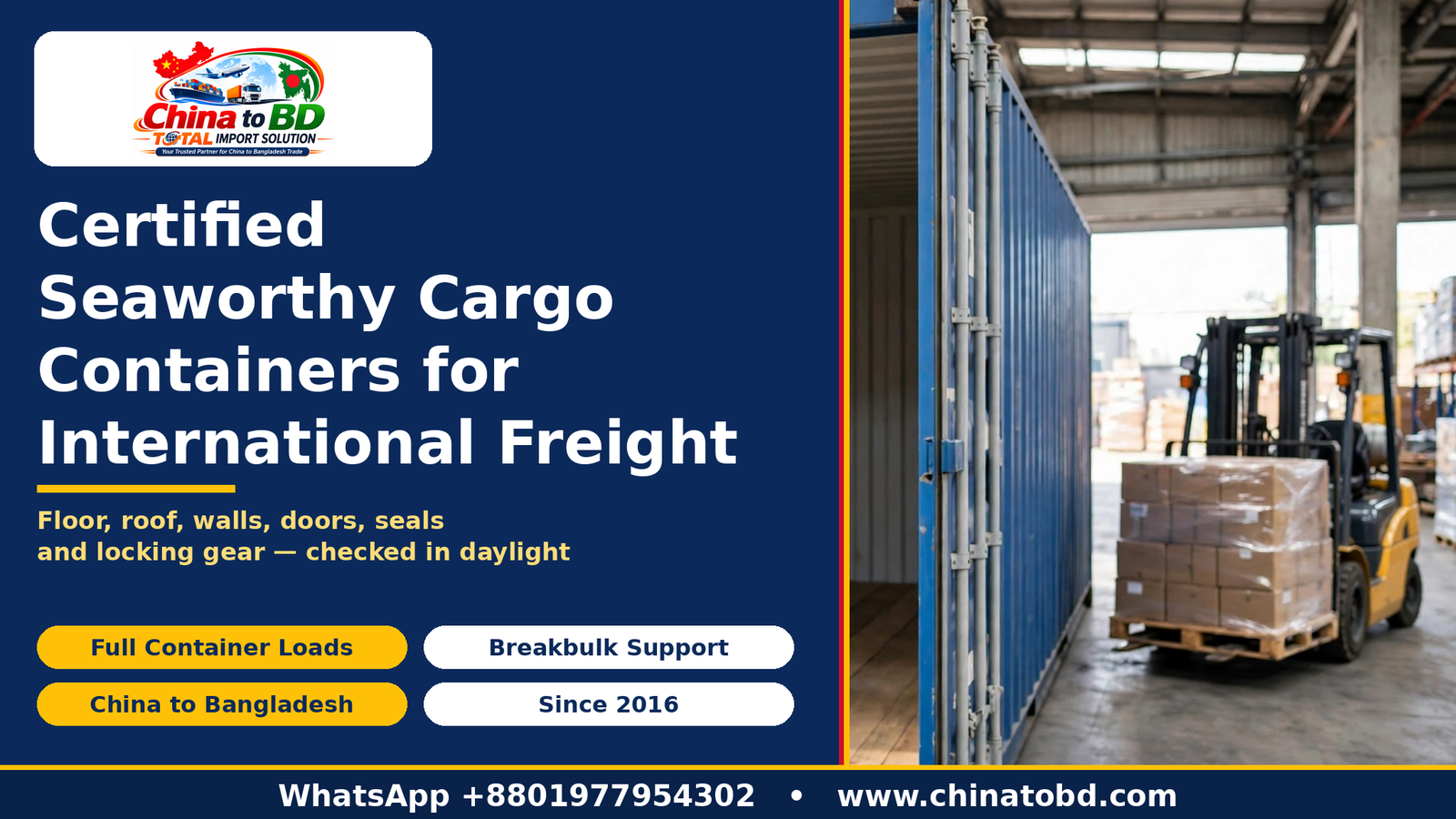
Loading is where container choice, inspection and paperwork come together. A good plan protects the cargo, uses the space well, and keeps the load stable for the sea journey. Prepare the loading area first: level, clean, dry ground with space for the container, the forklift and the cargo. Sweep the interior, check it again in daylight, dry it if needed, and have dunnage, pallets and protective material ready before loading begins.
Load heavier items first, low and close to the centre, spreading the weight evenly across the floor. Lighter items go on top, and fragile items go where they are least likely to be crushed or to move. Stack cartons squarely, labels facing out where possible, and fill or block gaps so the load cannot shift. Secure the load with straps, lashing, blocking or bracing where needed: heavy items so they cannot slide, tall stacks so they cannot topple, and the space at the doors blocked so cartons do not fall out on arrival. Photograph the finished load from the doors before closing them.
Once loading is complete, close the doors carefully, check they sit flat and the locking rods engage, and fit the seal. Record the seal number, photograph the sealed doors, and check the number against the shipping documents. For importers using a full container for the whole shipment, the general planning steps in Full Container Load FCL Service from China to BD give a useful overview of how a full container load is arranged and what to confirm with the forwarder.
Loading and Handling Steps
- Prepare a level, clean, dry loading area with space for container and forklift.
- Re-check the interior in daylight and sweep it clean before loading.
- Agree the order: heavy items low and central, light items on top.
- Load slowly, spread weight evenly, fill or block gaps.
- Secure heavy and tall items with straps, lashing, blocking or bracing.
- Photograph the finished load from the doors before closing them.
- Close the doors, check locking gear, fit the seal, record and photograph its number.
- Hand over the container with documents and seal number in the shipment file.
Cost Factors to Confirm at Booking
Shipping costs are made up of many parts, and the importer should understand which parts apply before booking. This section lists the factors to confirm, not any figure.
The ocean freight charge is the main cost of moving the container by sea, depending on route, container type and size, carrier, sailing date and the market at booking. Ask what it covers, what is excluded, and how long the quote is valid. Terminal handling charges cover handling at the loading and discharge ports. Documentation charges cover the bill of lading and related documents. Inland transport covers movement between the port and the warehouse or delivery point, and between the supplier and the loading port in China; confirm who arranges each leg and how it is charged. Depot and yard charges may apply for storage, handling or container hire beyond free time. Demurrage and detention charges may apply when a container is held beyond free time, so confirm free time in writing and plan unloading around it.
| Cost factor | What to ask at booking | Why it matters |
|---|---|---|
| Ocean freight | What is covered, excluded, how long quote is valid | Main sea transport cost |
| Terminal handling | Charges at loading and discharge ports | Port handling is separate from freight |
| Documentation | Charges for bill of lading and documents | Needed for shipment file and clearance |
| Inland transport | Who arranges each leg, how it is charged | Moves container between port and warehouse |
| Depot and yard charges | Storage, handling, hire beyond free time | Extra days can add charges |
| Demurrage and detention | Free time allowed, charges after free time | Plan unloading around free time |
| Customs and clearance | Broker, inspection and port charges | Needed to clear cargo in Bangladesh |
| Special equipment | Extra charge for reefer, open top, flat rack | Special containers need special booking |
| Insurance and survey | Cover arranged, inspection requested | Protects cargo, records condition |
Common Mistakes to Avoid
Many container problems come from a small number of repeated mistakes. The first is skipping the inspection: a container that looks sound from a distance can have a soft floor, a torn gasket or a bent locking rod visible only on a close check. Never skip it because the container is new, the depot is busy, or the team is in a hurry. The second is overloading or loading weight unevenly, which can damage the floor and make the load unstable. Spread the weight, keep heavy items low and central, and stay within the maximum gross weight on the CSC plate. The third is poor securing: loose cartons, unbraced tall stacks and unsecured heavy items can shift at sea and damage the goods around them.
The fourth mistake is ignoring moisture. A damp container, a wet floor, or cargo loaded in the rain can arrive with water damage that is hard to repair. The container should be dry before loading, and any sign of damp should be investigated before the doors are closed. The fifth is poor sealing and poor records: a seal number never recorded, or one that does not match the documents, causes delays at the port and on arrival. The sixth is booking without confirming details in writing. The seventh is assuming depot availability: space at Chittagong off-dock ICDs and Dhaka inland depots varies, and a plan depending on a depot that has not been contacted can fail on arrival.
Pre-Shipment and Loading Checklist
A checklist turns this guidance into a repeatable routine. Use the table below on every shipment, tick each item only when it has actually been done, and keep the completed checklist with the shipment file. If an item cannot be ticked, record the reason and the action taken.
| Stage | Check | Done |
|---|---|---|
| Booking | Container type, size and quantity confirmed in writing | ☐ |
| Booking | Vessel, sailing, ports and free time confirmed in writing | ☐ |
| Booking | Written quotation received, each charge listed separately | ☐ |
| Booking | Delivery point and depot availability confirmed in general terms | ☐ |
| Documents | Commercial invoice prepared from the actual goods | ☐ |
| Documents | Packing list prepared with weights, sizes, package count | ☐ |
| Documents | Customs broker advised and document list confirmed | ☐ |
| Container check | Exterior walls, roof, corner castings inspected in daylight | ☐ |
| Container check | Floor walked, checked for soft spots, stains, holes, debris | ☐ |
| Container check | Roof and walls checked inside and outside | ☐ |
| Container check | Doors open and close freely, sit flat against frame | ☐ |
| Container check | Door gaskets complete, flexible, free of tears | ☐ |
| Container check | Locking rods, handles and gear straight, working, able to lock | ☐ |
| Container check | CSC plate present, firmly fixed, legible; maximum weight noted | ☐ |
| Container check | Interior clean, dry, free of odour and debris; photos taken | ☐ |
| Loading | Loading area level, clean, dry, clear for forklift | ☐ |
| Loading | Weight plan agreed: heavy items low and central | ☐ |
| Loading | Cargo secured with straps, lashing, blocking or bracing | ☐ |
| Loading | Finished load photographed from the doors | ☐ |
| Loading | Doors closed, locking gear checked, seal fitted and recorded | ☐ |
| Loading | Seal number checked against documents and photographed | ☐ |
| Handover | Shipment file complete with notes, photos and documents | ☐ |
| Handover | Forwarder, supplier and receiver share same booking details | ☐ |
Frequently Asked Questions
Q1: What is a certified seaworthy cargo container?
A certified seaworthy cargo container is built to the applicable container standards, has passed the relevant inspection and approval process, and is found fit for carriage by sea at the time of the check. It should be structurally sound, weather-resistant, and able to be lifted, stacked and secured safely. Certification is shown by the plates and marks on the container, including the CSC plate.
Q2: How can I tell if a container is seaworthy before loading?
Look at the container in daylight, inside and outside, before any cargo is loaded. Check the floor for soft spots and stains, the roof and walls for holes and dents, the doors for free movement and a flat fit, the gaskets for tears, and the locking rods and handles for straightness and firm locking.
Q3: What should I check on the container floor?
Walk the full length of the floor and feel for soft, flexing or sinking areas. Look for rot, holes, stains, damp, oil and debris, and for nails or splinters left from an earlier load. Check the floor near the doors and in the centre, where forklifts and heavy cargo place the most load.
Q4: What should I check on the roof, walls and doors?
Check the roof for dents, bends, rust and patches, and for any place where water could collect. Check the walls for holes, deep dents and damaged panels, and look for light coming through from the inside. Check the doors for free movement, a flat fit against the frame, complete gaskets and working hinges.
Q5: What is the CSC plate and why does it matter?
The CSC plate is a metal plate fixed to the container, usually near the doors, that records information about the container approval and its safe working limits, including the maximum gross weight. It matters because it shows the weight the container is approved to carry and provides a reference for its inspection history.
Q6: Which container type should I choose for general cargo?
A standard dry container suits most general cargo, including cartons, palletised goods and manufactured products. An open top container suits tall or crane-loaded cargo, a flat rack suits heavy or wide cargo, and a refrigerated container suits cargo needing temperature control.
Q7: What documents do I need for a container shipment from China to Bangladesh?
The usual documents include a commercial invoice, a packing list, and a bill of lading or sea waybill, with a certificate of origin where required. Other documents may be needed depending on the cargo, such as treatment or quality certificates.
Q8: How should cargo be loaded to stay stable at sea?
Place heavy items low and close to the centre, spread the weight evenly across the floor, and place lighter items on top.
Q9: How do seals work and why is the seal number important?
A seal is fitted to the container doors after loading to show whether the container has been opened during transit. The seal number is recorded on the shipping documents and checked at the port and on arrival. If the seal number does not match the documents, or if a seal is loose, damaged or missing on arrival, report it to the forwarder and the receiver before the doors are opened.
Q10: What cost factors should I confirm before booking?
Confirm the ocean freight charge and what it covers, terminal handling charges, documentation charges, inland transport, depot and yard charges, demurrage and detention terms including free time, customs and clearance charges, and any extra charge for special equipment, treatment, insurance or survey.
Q11: What are the most common mistakes with seaworthy containers?
The most common mistakes are skipping the inspection, overloading or loading weight unevenly, leaving cargo unsecured, ignoring damp or a wet floor, fitting a seal without recording its number, and booking without confirming the details in writing. Another common mistake is assuming depot space will be available without asking.
Q12: Can a container be checked again after it leaves the depot?
Yes, and it should be. A container can be damaged in transit between the depot and the loading point, so check it again when it arrives at the warehouse. Open and close the doors, check the interior in daylight, walk the floor, and look at the seals and locking gear.
Q13: What should I do if I find damage during the inspection?
Record the damage with notes and photographs, showing the location and extent of the defect. Tell the container provider or the forwarder straight away and ask whether the defect can be repaired or whether another container should be supplied.
Q14: How do I plan delivery and depot handling in Bangladesh?
Ask the forwarder or depot operator about availability at Chittagong off-dock ICDs and Dhaka inland depots in general terms, and plan around the answer given.
Q15: Does an older container mean it is not seaworthy?
No, age alone does not decide seaworthiness. An older container that has been well maintained and recently inspected can be fit for service, while a newer container can still have a defect. What matters is the present condition, the maintenance record and the inspection result.
Q16: How can China to BD | Total Import Solution help with certified seaworthy cargo containers for international freight?
China to BD | Total Import Solution can help plan the shipment, confirm the container type and booking details with the forwarder, and support the importer from supplier pickup in China through to delivery in Bangladesh. Contact the team on WhatsApp +8801977954302 or by email at info@chinatobd.com.
Get a Written Quotation for Your Shipment
If you are planning a shipment from China to Bangladesh and want to move your goods in a certified seaworthy cargo container, share your goods list with the team and ask for a written quotation. Tell the team what the goods are, how they are packed, their approximate size and weight, the place of pickup in China and the delivery point in Bangladesh. A clear goods list helps the team confirm the right container type, the booking details and the documents needed.
- WhatsApp: Chat on WhatsApp
- Phone: Call +8801977954302
- Email: info@chinatobd.com
Share the goods list, the packing details and the preferred timing, and the team will respond with the next steps for a written quotation. A message on WhatsApp, a phone call or an email with the goods list is enough to start the discussion. Confirm every booking detail in writing before the goods move, and keep the quotation, the booking confirmation and the inspection notes together in the shipment file.
Contact China to BD | Total Import Solution
- Brand: China to BD | Total Import Solution
- Company: Total Import Solution since 2016
- Helpline: +8801977954302
- Email: info@chinatobd.com
- Warehouse & Office: House 38A, Mendi Dental College Road, Road 11, Dhanmondi Riverview Model Town, Dhaka 1209
- Website: www.chinatobd.com
For help with certified seaworthy cargo containers for international freight, contact the team before the vessel sails. Share the goods list, confirm the container type and the booking details in writing, and plan the inspection, loading and delivery steps together. A careful start, a sound container and a clear written plan give every shipment the best chance of arriving safely, and the team is ready to help you prepare for the next sailing.
About the Author