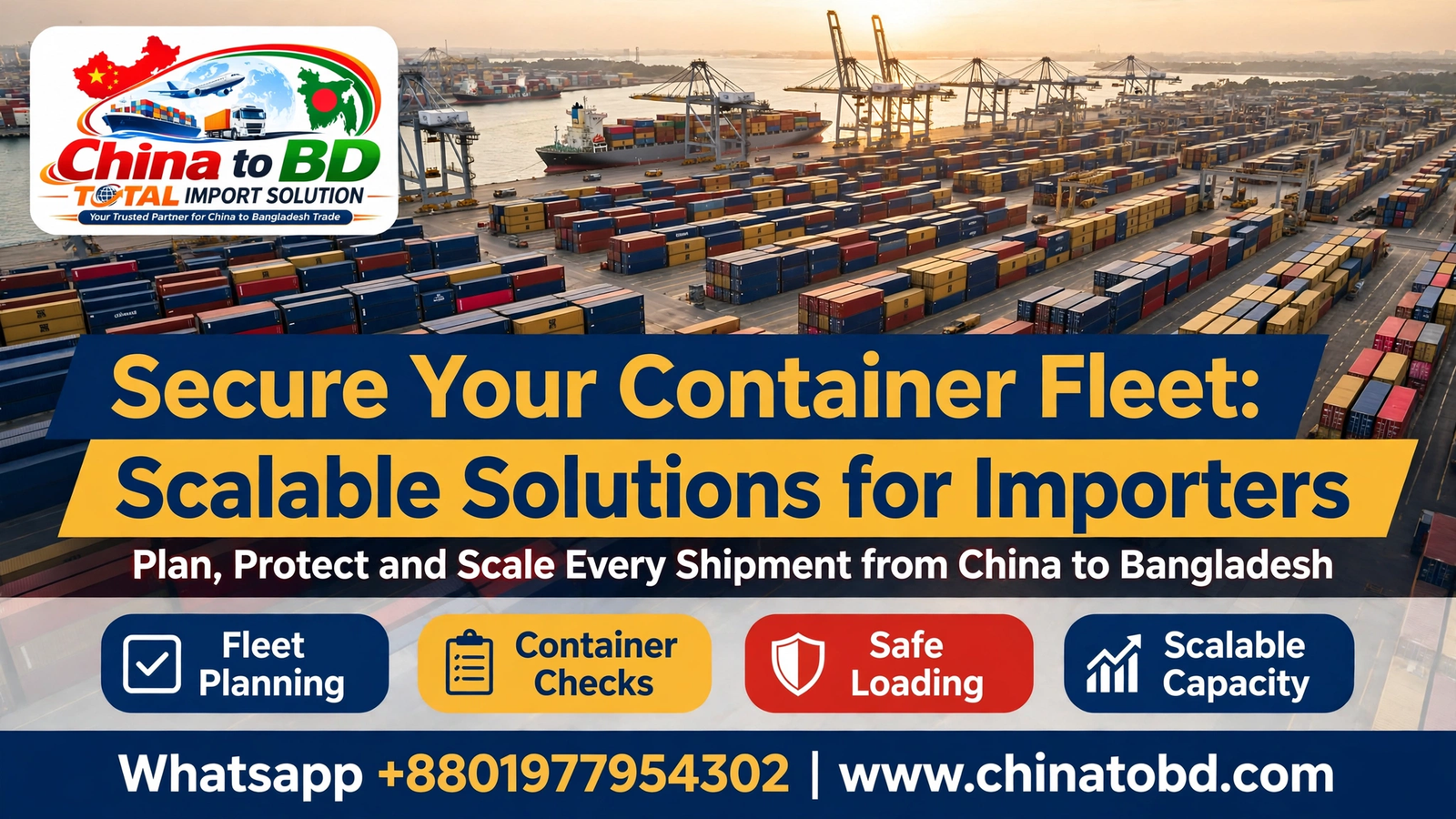
Secure Your Container Fleet: Scalable Solutions for Importers
Secure Your Container Fleet: Scalable Solutions for Importers
For an importer bringing goods from China to Bangladesh, containers are far more than steel boxes on a ship. Every container carries stock, cash, and promises made to your own customers. When a container arrives in good order, with its seal intact and its papers matching, your warehouse can unload and your buyers can plan with confidence. When something goes wrong, the delay spreads through the whole chain, from the port to the shop floor. That is why it pays to think of your containers as a fleet, a system to manage, rather than as one booking at a time.
A container fleet does not mean owning dozens of boxes. It means the full set of containers you use across your shipments, and how you plan, check, load, and return them. Some importers move one or two containers a month. Others move many every week. In both cases the same questions apply: how many containers do you need, what sizes suit your goods, how do you check each one, and how do you keep clear records? This article answers them in plain steps.
What a Container Fleet Means for an Importer
A container fleet is the working set of containers an importer relies on to move goods from origin to destination. For most importers on the China to Bangladesh route, the fleet is not owned outright. It is made up of containers supplied through shipping lines and logistics partners, booked shipment by shipment and returned after unloading. What makes it a fleet, rather than a series of one-off bookings, is that you manage it as a whole: you track how many containers you use, which sizes you use most, which routes they travel, and how each one performs.
Think of it in four parts: capacity, the number and size of containers you can call on; condition, whether each container is clean, dry, sound, and fit for your goods; control, the seals, numbers, photographs, and records that follow each container; and return, the empty container going back on time, in the right place, with the right paperwork.
An importer who manages a fleet well can answer simple questions at any moment: how many containers are on the water, which are due at Chittagong this week, and which empties still need to be returned? These answers come from records, not from memory. A small notebook or a simple spreadsheet is enough to start, and the habit of recording container numbers, seal numbers, loading dates, and return dates turns a pile of bookings into a fleet you can manage.
It also helps to know the container types you are likely to meet. A standard dry container suits most general cargo, a high cube gives extra height for light, bulky goods, an open top suits tall cargo loaded from above, a flat rack suits heavy or wide machinery, and a refrigerated container suits goods that need a steady temperature. Knowing which type fits your goods helps you book the right box the first time.
Planning Fleet Size Around Shipment Volume
Fleet size starts with your shipment volume, and volume starts with your orders. Before you book anything, look at what you expect to move over the next month, the next quarter, and the next season. Count your orders in cartons, pallets, or cubic metres, and group them by the week they need to leave China. A quiet week may need one container, a busy week four or five, and a festival season far more. Planning from this picture beats booking in a rush each time an order lands.
Next, match your goods to container sizes. A common mistake is to book the largest container by habit, or the smallest one to save on freight, without checking how the goods fill the space. A container that is half empty wastes money on every sailing. A container that is overfilled is worse: doors will not close properly, cartons get crushed, and the load may need to be split at the last minute. Measure your cartons and pallets, and work out how many fit in each size before you book.
Seasonal change matters a great deal on this route. Many importers see a clear pattern: steady months, a rush before major festivals, and a quiet spell after them. Mark these seasons in advance, set a base level for steady months, and talk to your logistics partner early about the busy season, when space fills up.
| Monthly volume | Typical fleet pattern | Planning focus |
|---|---|---|
| 1 to 2 containers | One size, one loading point | Keep records simple and exact |
| 3 to 6 containers | Two sizes, possibly two loading points | Match size to each order |
| 7 to 15 containers | Mixed sizes, weekly sailings | Balance space with warehouse capacity |
| More than 15 containers | Regular weekly plan, multiple factories | Book ahead, review every week |
Do not forget the return leg: every loaded container becomes an empty container after unloading, and that empty box must go back. If your warehouse is small, a run of containers arriving together can block the yard while empties wait for collection. Plan unloading so empties are released as soon as each container is empty.
If you move full loads regularly, it is worth reading about the full container option in detail. Full Container Load FCL Service from China to BD explains how a full container service works from China to Bangladesh.
Scaling Up and Down with Demand
Scaling a container fleet means changing the number and size of containers in step with your orders. That only works well when the change is planned instead of improvised. A sudden jump from two containers a month to ten needs more warehouse space, more hands, more paperwork, and more cash tied up in stock.
Start by setting two markers: a steady level for an ordinary month and a peak level for your busiest month. Note what causes the peak — a festival season, a new buyer, a bulk order, or a product launch. A festival peak repeats every year, so last year’s numbers are a useful guide. A new buyer is less certain, so plan in stages, adding containers only as confirmed orders arrive.
Scaling up works best in steps. Add one or two containers first, check that loading, transport, and unloading all run smoothly, and then add more. This keeps your warehouse from being flooded and gives your team time to adjust. It also protects your cash flow, because each extra container means more goods paid for and more freight to settle.
Scaling down needs just as much care. When orders slow, review your schedule every month and cut back in line with real orders. Fewer containers mean lower freight and handling charges, and a smaller pile of empties to return.
Sometimes goods need extra time at the destination before unloading, or a buyer needs a few more days to clear stock. Renting a container for extended offloading can help, but it must be planned and confirmed in advance, with the extra time and any related charges agreed before the container arrives. Zero Demurrage Shipping: Rent Containers for Extended Offloading explains how extended offloading works and why early planning matters.
Follow these steps whenever you scale your fleet up or down:
- Confirm the orders behind the change, in writing, with quantities and dates.
- Work out the container count and sizes from carton and pallet measurements.
- Check warehouse space and labour for the new dates.
- Confirm space and sailing options before promising dates to buyers.
- Update your monthly plan and share it with your supplier and your team.
- After the shipment, record what worked and what did not.
Checks That Keep a Fleet in Good Order
A fleet stays in good order when every container is checked before loading, in transit, and again at arrival. These checks are simple, but skipping them is one of the most common causes of trouble: a container that looks fine from the outside can have a damaged floor, a leaking roof, or a door that no longer closes tightly. Finding such a fault at the factory costs little; finding it after the goods are inside costs far more.
Container condition is the first check: walk around the container and look at the walls, roof, doors, and floor. The walls should be straight, without deep dents or holes. The roof should be whole. The doors should open and close smoothly, and the locking rods should move freely. The floor should be dry, clean, and strong. Step inside and close the doors: if daylight shows through, or the inside is damp, ask for a different container.
Seals are the second check: each container should be fitted with a seal after loading, and the seal number written down at once, with a photograph of the seal on the door. The same number should appear on the shipping documents. When the container arrives, check the seal before you open the doors. If the seal number is different, or the seal looks damaged, stop and report it to your logistics partner before unloading. A careful seal routine gives you a clear record and an early warning when something is not right.
Records are the third check: they tie the whole fleet together. For every container, keep a single record with the container number, seal number, size and type, loading date and place, goods inside, vessel and sailing date, expected arrival date, and return date of the empty box, with photographs of the loaded container, the closed doors, and the seal. These records answer questions from buyers and customs, and give you evidence if a query ever arises.
Return of empties is the fourth check, often the one importers forget. After unloading, the empty container still belongs to the line, and it must go back to the agreed place by the agreed time. Late returns can bring extra charges, and a yard full of unreturned empties can block your warehouse. Make the return part of your unloading plan: as soon as a container is empty, note the date, check the inside for damage or leftover packing, and arrange collection. Photograph any damage and report it at once.
| Check | What to look for | When to do it |
|---|---|---|
| Container condition | Straight walls, sound roof, dry clean floor, doors that close | Before loading, at the factory |
| Seals | Seal fitted, number recorded and photographed, matches documents | At loading and again at arrival |
| Records | Container number, seal number, dates, goods list, photos | At loading, updated through transit |
| Return of empties | Empty confirmed, inside checked, collection arranged | As soon as unloading is finished |
Documents and Checks Before Booking
Booking a container is not only a matter of choosing a sailing date: a missing paper or a wrong detail can hold a container at the port. Sort these out before the booking is made, while there is still time to correct an error without pressure.
Start with the goods themselves: confirm the full goods list with your supplier — item names, quantities, carton counts, weights, and values. Check that it matches your order and payment, and find out about any change before loading, not after the container has sailed.
Next, confirm the commercial invoice and the packing list. The invoice shows what was sold and for how much. The packing list shows how the goods are packed: how many cartons, what is in each carton, and how much each carton weighs. These two documents travel with the shipment and are used at both ends, so the details on them must match the goods inside the container. Check the names, numbers, and totals line by line: a small error can cause questions at the port that take days to settle.
Then check the booking details with your logistics partner. Confirm the container size and type, the loading place and date, the port of loading in China, the port of discharge, and the final delivery place in Bangladesh. Confirm the vessel and sailing date, the free time allowed for unloading and returning the empty container, and where the empty should be returned. Agree each point in writing.
Customs and port requirements deserve a separate check. Different goods can need different papers, so confirm the current requirements for your goods with your logistics partner or customs agent before booking. Ask whether any certificate, test report, or permit is needed. Also confirm the delivery arrangements on the Bangladesh side: whether the container will be delivered to your warehouse, held at an off-dock yard, or moved to an inland depot. If your goods will pass through a yard or depot, confirm availability at Chittagong off-dock ICDs and Dhaka inland depots in general terms with your logistics partner, and ask what the usual process and timing look like, without assuming that space or a slot is assured for any particular date.
| Document or check | What to confirm | Who provides it |
|---|---|---|
| Goods list | Items, quantities, cartons, weights match the order | Supplier |
| Commercial invoice | Values, quantities, and buyer and seller details | Supplier |
| Packing list | Carton count, contents, and weights match the goods | Supplier |
| Booking confirmation | Container size and type, ports, dates, free time | Logistics partner |
| Customs requirements | Certificates, permits, or reports needed for the goods | Supplier or agent |
| Delivery plan | Final delivery place, yard or depot arrangements | Logistics partner |
| Insurance papers | Cover in place for the shipment, if arranged | Importer or insurer |
Loading and Handling Planning
Good loading starts long before the container doors open. A loading plan decides what goes into the container, in what order, and how it is secured. Without a plan, loading becomes guesswork: heavy cartons end up on top of light ones and fragile goods near the door. With a plan, the load is balanced, the goods are protected, and unloading is quick and orderly.
The first part of the plan is the order of loading. Goods that will be unloaded last should go in first, at the far end of the container. Goods that will be unloaded first should go in last, near the doors. Heavy items should go at the bottom and spread evenly across the floor, so the weight is balanced from side to side and from front to back. Light and fragile items should go on top, away from pressure. If you load more than one order into a single container, keep each order together and mark the cartons clearly.
The second part of the plan is protection inside the container. Cartons should be stacked neatly, with no gaps that let them slide during the voyage. Use dunnage, air bags, or bracing where the load needs support, and keep goods away from the container walls where damp can gather. Cover goods that need protection from dust or moisture, and keep nothing pressed against the doors. A load that is well braced moves as one piece; a loose load shifts, and shifting damages cartons.
Handling at each stage needs the same care. At the factory, the loading team needs enough time, hands, and equipment to move goods without dropping or dragging them. At the port, the load must be balanced and secured before the doors close. At the warehouse in Bangladesh, the unloading team needs a plan too: where each pallet will go, how the goods will be checked, and where the empty container will stand.
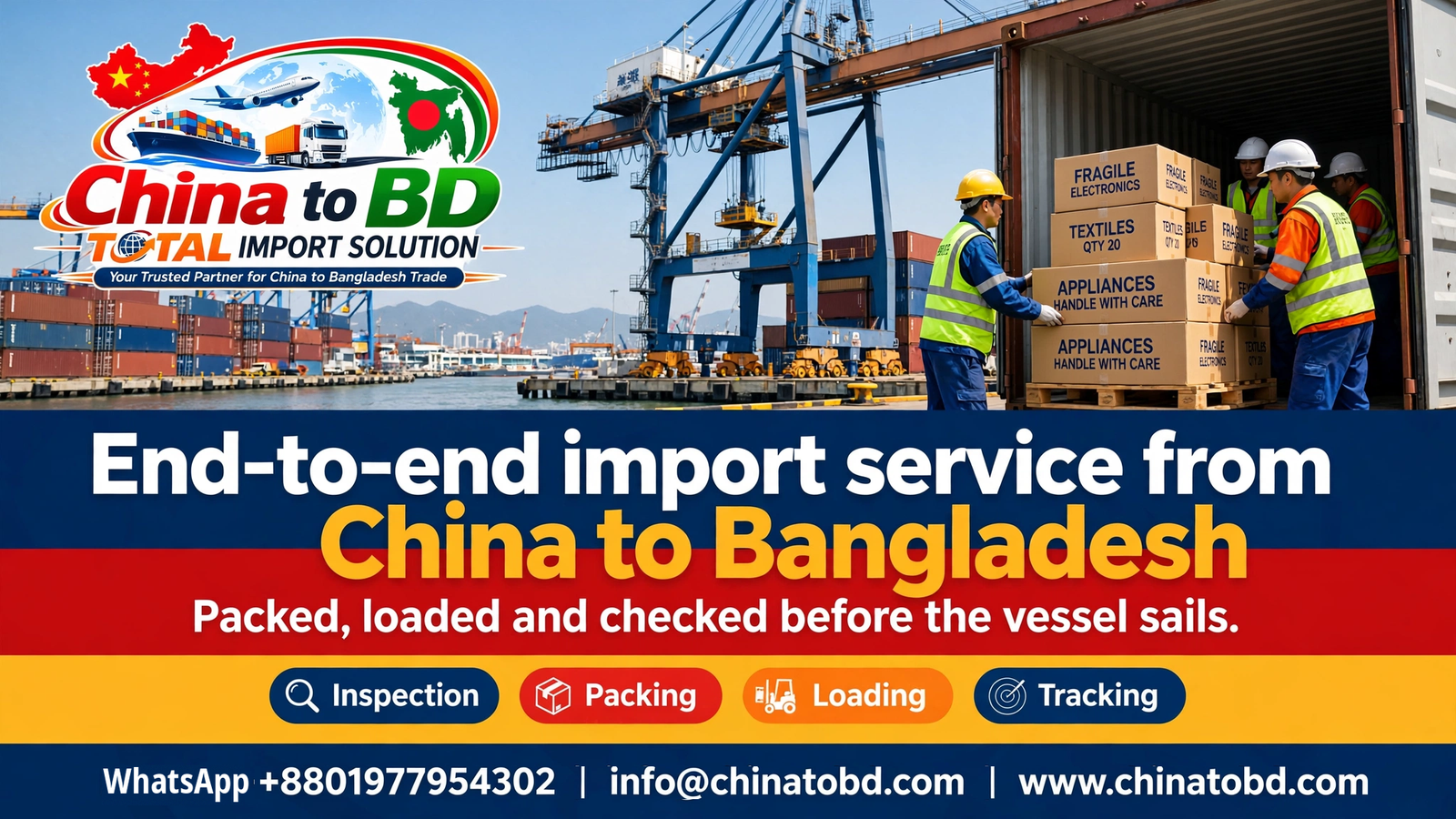
Weather and timing also belong in the loading plan. Loading in heavy rain can wet cartons before they are even inside the container, so a covered loading area is worth arranging where possible. Loading late in the day, under pressure to meet a vessel cut-off, is when mistakes happen most often, so build in spare time. A realistic timetable, agreed with the factory and the transport provider, protects your cargo.
Photographs are a simple and powerful part of loading planning. Photograph the empty container before loading, the load halfway through, the finished load before the doors close, and the sealed doors with the seal number visible, and keep the photographs in your records.
Cost Factors to Confirm at Booking
The cost of a container shipment is made of many parts, and only some of them appear in the first quotation. Confirming each factor before you book is the best way to keep the final bill close to the first estimate. Ask your logistics partner to list every factor that applies to your shipment, and keep the list with your booking file. If a factor is unclear, ask what it covers and when it applies, so you can plan for it.
The first factor is the sea freight itself, covering the container’s journey from the load port in China to the discharge port in Bangladesh, usually quoted per container by size and type. Ask whether the quoted freight covers the full journey, and whether any surcharge applies for the season, the route, or the cargo type. A quotation that looks low can become costly if surcharges are added later.
The second group of factors sits at the ports. These include handling charges for lifting the container on and off the vessel, terminal charges, and documentation charges. Some are included in the freight quotation and some are charged separately, so ask for a clear breakdown. Also confirm the free time allowed at the port, for storage and for returning the empty container. Free time matters, because a container that waits too long at either end can bring charges larger than the freight itself.
The third group covers the inland journey. On the China side, this is the move from the factory to the load port; on the Bangladesh side, the move from the port to your warehouse, which may pass through an off-dock yard or an inland depot. Confirm the transport cost for each leg. If your goods will be held at a yard or depot, confirm the usual storage and handling factors there, and ask about availability at Chittagong off-dock ICDs and Dhaka inland depots in general terms, so you know what to expect without assuming a particular slot is held for you.
Other factors to confirm include the cost of the seal, any inspection the goods may need, insurance if you arrange it, and returning the empty container. If your goods need a special container type, confirm whether it carries an extra charge. If your cargo is heavy, confirm whether any weight-related factor applies.
This article gives factors only, not figures: rates change with the season, the route, the cargo, and the market. Always ask your logistics partner for a written quotation for your own goods and dates, and confirm every factor above before you book.
Common Mistakes Importers Make with Container Fleets
Most fleet mistakes come from rushing. The first mistake is booking the wrong container size. It happens when the order is counted in pieces instead of cartons, or when the carton size is guessed instead of measured, leaving goods behind in a container that is too small, or money spent on empty space in one that is too large. Measuring cartons and counting pallets before booking prevents this mistake entirely.
The second mistake is skipping the condition check. A container is accepted at the factory without a walk-around, the doors are closed, the seal is fitted, and the fault is only found at arrival. By then, the goods may already be affected, and the question of who is responsible is much harder to settle. A five-minute check before loading is one of the least costly forms of protection an importer can have.
The third mistake is poor seal practice: the seal number is not written down, or it is written down wrongly, or the seal is not photographed. When the container arrives, there is no way to confirm that the seal on the doors is the seal that was fitted at loading. Write the number down at once, photograph it, and make sure it appears on the documents.
The fourth mistake is leaving the return of empties until later. The container is unloaded, the goods are put away, and the empty box stands in the yard while everyone moves on to the next job. Days pass, and extra charges begin. Make the return part of the unloading plan, with a named person responsible and a date written on the record.
The fifth mistake is weak records. Container numbers are kept in one place, seal numbers in another, and dates are remembered rather than written down. When a buyer asks where a shipment is, or when accounts need the freight details, nobody can answer quickly. A single record per container, kept in one file and updated at each stage, solves this.
| Mistake | What goes wrong | Simple fix |
| — | — | — |
| Wrong container size | Goods left behind or space wasted | Measure cartons and pallets before booking |
| Skipped condition check | Fault found only at arrival | Walk around and photograph the empty box |
| Poor seal practice | Seal cannot be verified at arrival | Record and photograph the seal number at once |
| Late empty return | Extra charges and a blocked yard | Make return part of the unloading plan |
| Weak records | No clear answer when questions arise | One record per container, updated at each stage |
Pre-Shipment and Loading Checklist
Use this checklist before every shipment, and keep the completed copy with the booking file for that container.
| Step | Check | Done |
|---|---|---|
| 1 | Goods list confirmed with supplier, quantities and cartons match the order | ☐ |
| 2 | Commercial invoice and packing list checked line by line | ☐ |
| 3 | Container size and type matched to carton and pallet measurements | ☐ |
| 4 | Booking confirmed in writing, with ports, dates, and free time | ☐ |
| 5 | Customs requirements and certificates confirmed for the goods | ☐ |
| 6 | Delivery plan confirmed, including yard or depot arrangements | ☐ |
| 7 | Cost factors confirmed, including port, inland, and return factors | ☐ |
| 8 | Empty container inspected, walls, roof, floor, and doors checked | ☐ |
| 9 | Loading plan agreed, with order of loading and weight balance | ☐ |
| 10 | Goods loaded, braced, and photographed before doors close | ☐ |
| 11 | Seal fitted, number recorded and photographed, matches documents | ☐ |
| 12 | Container number, seal number, and sailing details filed in records | ☐ |
| 13 | Warehouse and unloading team informed of arrival date and plan | ☐ |
| 14 | Empty return arranged, with place, date, and responsible person noted | ☐ |
If any item cannot be ticked, stop and sort it out before the container leaves.
Frequently Asked Questions
Q1: What does a container fleet mean for an importer?
A container fleet is the full set of containers an importer uses across shipments, managed as one system. It covers capacity, condition, seals and records, and the return of empty containers. Even an importer who moves one or two containers a month has a fleet.
Q2: Do I need to own containers to have a fleet?
No. Most importers use containers supplied through shipping lines and logistics partners, booked shipment by shipment. What matters is how you plan, check, load, and return them, and whether you keep clear records.
Q3: How do I work out how many containers I need?
Start with your orders. Count them in cartons or pallets, group them by the week they need to leave China, and match the volume to container sizes using carton measurements. Then set a steady monthly level and a peak level for your busiest season, and keep a rolling four-week plan.
Q4: Which container size should I choose for my goods?
Choose the size that fits your measured cartons and pallets, not the size you used last time. A standard dry container suits most general cargo, a high cube suits light and bulky goods, and special types suit tall or wide cargo.
Q5: How can I scale my fleet up when orders rise?
Scale up in steps. Confirm the orders in writing, work out the container count and sizes from measurements, check warehouse space and labour, and confirm space with your logistics partner before promising dates to buyers.
Q6: How can I scale my fleet down in a quiet season?
Review your schedule every month and cut back in line with real orders. Load small orders into smaller containers where that fits, and avoid booking out of habit. Fewer containers mean lower freight and handling charges and fewer empties to return,
Q7: What should I check on a container before loading?
Walk around the container and check the walls, roof, doors, and floor. Look for dents, holes, and daylight showing through. Step inside the empty container and close the doors to check for light or damp. Check that the floor is dry, clean, and strong, and that the doors open and close smoothly.
Q8: Why is the seal number so important?
The seal number is your record that the container was closed properly after loading and stayed closed until arrival. Write the number down at once, photograph the seal on the doors, and make sure the same number appears on the shipping documents.
Q9: What records should I keep for each container?
Keep one record per container with the container number, seal number, size and type, loading date and place, goods inside, vessel and sailing date, expected arrival date, and empty return date. These records help you answer questions from buyers and customs.
Q10: What should I do with the empty container after unloading?
Arrange its return as part of the unloading plan. Note the date it became empty, check the inside for damage or leftover packing, photograph any damage, and arrange collection to the agreed place by the agreed time.
Q11: Which documents do I need before booking?
You need a confirmed goods list, a commercial invoice, and a packing list from your supplier, plus a booking confirmation from your logistics partner. You may also need certificates or permits for certain goods, so confirm the current requirements with your logistics partner or customs agent before booking.
Q12: How should goods be loaded inside a container?
Load in a planned order, with goods for last unloading at the far end and goods for first unloading near the doors. Put heavy items at the bottom, spread the weight evenly, and place light and fragile items on top.
Q13: What cost factors should I confirm before booking?
Confirm the sea freight, port handling and documentation charges, free time at the port, inland transport on both sides, yard or depot factors, seal and inspection costs, insurance if arranged, and the cost of returning the empty container.
Q14: What are the most common fleet mistakes?
The most common mistakes are booking the wrong container size, skipping the condition check, poor seal practice, late return of empties, weak records, and planning only the sea leg while forgetting the warehouse and unloading team.
Q15: How do I plan for delivery through a yard or depot in Bangladesh?
Confirm the delivery plan with your logistics partner before booking, including whether the container will go to your warehouse, an off-dock yard, or an inland depot, and confirm availability at Chittagong off-dock ICDs and Dhaka inland depots in general terms.
Q16: How can China to BD | Total Import Solution help importers secure a container fleet with scalable solutions?
China to BD | Total Import Solution, working since 2016, helps importers plan container fleets that can grow or shrink with their orders. The team can help you work out container numbers and sizes, check documents before booking, plan loading and handling, and keep the records for each container. Share your goods list for a written quotation.
Get a Written Quotation for Your Container Fleet
If you are planning your next shipment from China to Bangladesh, start with a written quotation. Share your goods list — item names, quantities, carton counts, and weights — and the team will help you work out the container sizes, the loading plan, and the checks that fit your order. A written quotation gives you a clear base to plan from, before you commit to a booking.
Send a message on WhatsApp with your goods list, call the helpline to talk through your shipment, or send an email with your order details.
- Chat on WhatsApp
- Call +8801977954302
- Email: info@chinatobd.com
Contact China to BD | Total Import Solution
- Brand: China to BD | Total Import Solution
- Company: Total Import Solution since 2016
- Helpline: +8801977954302
- Email: info@chinatobd.com
- Warehouse & Office: House 38A, Mendi Dental College Road, Road 11, Dhanmondi Riverview Model Town, Dhaka 1209
- Website: www.chinatobd.com
A container fleet that is planned well, checked carefully, and recorded properly is a fleet that supports your business instead of holding it back. The steps in this article are simple on their own, but together they make the difference between a shipment that runs smoothly and one that runs into trouble. Start with your next order: measure the cartons, write the plan, run the checklist, and keep the record. If you would like help putting that plan together, contact China to BD | Total Import Solution before the vessel sails, share your goods list for a written quotation, and let the team help you secure a container fleet that can scale with your business.
About the Author