
Container Depots in Chittagong: Instant Availability & Gate Pass
Container Depots in Chittagong: Instant Availability & Gate Pass
When goods arrive from China for delivery in Bangladesh, the journey does not end at the port. After discharge, containers move to a depot, wait for their turn to be handled, and then leave through a gate under a pass that records the movement. For many importers, this depot stage is the part of the shipment that receives the least attention during planning, yet it is the stage where a missing document, an unconfirmed space, or a transport booking made too late can hold up the whole delivery. Understanding how container depots in Chittagong work, what an off-dock inland container depot does, and how a gate pass is arranged helps an importer plan the final leg of the journey with care and avoid avoidable waiting at the gate.
China to BD | Total Import Solution has supported importers moving goods from China to Bangladesh since 2016, and the depot stage is one of the steps the team plans with every shipment. The Warehouse & Office is at House 38A, Mendi Dental College Road, Road 11, Dhanmondi Riverview Model Town, Dhaka 1209. Importers who want help with depot planning can reach the team on Helpline +8801977954302 or by email at info@chinatobd.com, and the website is www.chinatobd.com. This article explains the depot stage in plain terms, so that an importer knows what to ask, what to prepare, and what to check before the container moves.
The guidance here covers Chittagong off-dock inland container depots and Dhaka inland depots in general terms. No depot is named, because availability, procedures, and space change from time to time, and the right choice depends on the shipment itself. The aim is to give the reader a clear picture of the depot stage, the documents that are usually needed, the checks that should be made before the visit, and the planning that keeps loading and onward transport moving in an orderly way.
What a Container Depot Does
A container depot is a yard where containers are received, stored, checked, and handed over for the next stage of their journey. Loaded containers arriving from the port may be held there until transport is ready, while empty containers are collected, checked, and kept ready for the next loading. The depot keeps a record of every container that enters and leaves, and the gate is the point where that record is made. Staff at the depot check the container, note its condition, and confirm that the papers presented at the gate match the booking.
Inside the yard, containers are stacked and moved by handling equipment, and space is arranged so that the container needed next can be reached without moving many others. When a container is called for loading, it is brought to a loading point, where goods are placed inside under supervision. When a loaded container is ready to leave, it is checked once more, the gate pass is prepared, and the vehicle carrying it is allowed out through the gate. Each of these steps depends on the one before it, so a delay at any point can affect the rest of the plan for the day.
Depot Types and Roles in Chittagong and Dhaka
Chittagong off-dock inland container depots, often called ICDs, are yards located away from the main port terminals that receive containers, store them, and release them for onward movement. They help spread the handling work beyond the port itself, so that containers can be processed in an orderly way. An importer whose goods arrive through Chittagong may find that the container is held at an off-dock depot while transport and loading are arranged, and the gate pass is the document that allows the container to leave that yard.
Dhaka inland depots serve a different part of the journey. They sit closer to the warehouses and factories where goods are finally received, and they are used for holding containers, arranging loading and unloading, and returning empty containers after delivery. For an importer based in Dhaka, an inland depot can shorten the final leg of the journey and make it easier to plan loading and unloading near the warehouse. The choice between a Chittagong depot and a Dhaka inland depot depends on the route, the delivery point, and the plan agreed with the team handling the shipment.
| Depot type | Where it generally sits | What it is used for | What to ask first |
|---|---|---|---|
| Off-dock ICD near Chittagong | Away from the main port terminals, in the Chittagong area | Receiving, storing, and releasing containers after discharge | Whether space is open for the planned dates, and the gate pass steps |
| Port-side yard | Close to the port terminals | Short holding of containers before onward movement | How long a container may be held, and the release steps |
| Dhaka inland depot | Inland, near Dhaka warehouses and factories | Holding, loading and unloading, and empty return near the delivery point | Whether loading space and handling support are open for the planned dates |
| Private depot yard | In a yard run for handling and storage work | Storage, handling, and handover of containers | The documents needed at the gate, and the handling steps |
| Warehouse-linked yard | Beside or near a warehouse | Direct movement of goods between container and warehouse | The loading order, and the time needed for unloading |
Why Planning the Depot Step Matters
The depot stage sits between the sea journey and the final delivery, and it is easy to treat it as a small detail. In practice, it is the stage where several separate plans come together: the shipping line releases the container, the depot receives it, transport is booked to carry it, and the loading team prepares to fill or empty it. If any one of these plans is not ready, the container waits, and the waiting can affect the transport booking, the loading team, and the warehouse receiving schedule. Planning the depot step early keeps these separate plans in line with each other.
Availability is the first reason to plan early. Depot space is shared among many importers, and the space open on one day may not be open on another. Confirming availability before the container arrives gives the importer a clear answer and time to consider another date or another yard if the first choice is full. Asking for written confirmation of the space and the agreed steps also gives everyone a record to refer to, so that the plan does not rest on memory alone.
The gate pass is the second reason. A gate pass is not issued by asking at the gate on arrival; it is prepared from documents that must be gathered, checked, and presented in order. The invoice, the packing list, the bill of lading, and the booking confirmation are the standard papers usually involved, and each one should match the others. If a paper is missing or a detail does not match, the gate pass cannot be completed until the matter is corrected, and the vehicle waits. Gathering the papers early, checking them against each other, and keeping copies ready avoids that wait.
Checking Before You Go
Before setting out for a depot, an importer should run through a short set of checks. The first check is availability: has the depot confirmed that space is open for the planned dates, and is that confirmation in writing? A verbal answer can be misunderstood or forgotten, while a written confirmation can be shown to the transport provider and the loading team so that everyone works from the same plan.
The second check is the container itself. Confirm the container size and condition that has been booked, and ask whether the depot can receive that container on the planned date. The container should be checked for visible damage before loading, and any concern should be raised with the team handling the shipment before goods are placed inside. Loading goods into a container that has not been checked can lead to problems that are harder to solve once the goods are inside.
| Check | Why it matters | What to confirm |
|---|---|---|
| Depot availability | Space is shared and changes over time | Written confirmation for the planned dates |
| Gate pass steps | The pass is prepared from documents, not issued on the spot | Which papers are needed, and who prepares the pass |
| Container size and condition | The yard and the handling plan depend on the container | The size booked, and the condition on arrival |
| Document set | Papers must agree with each other | Invoice, packing list, bill of lading, and booking confirmation |
| Transport booking | The vehicle must arrive at the right yard at the right time | Vehicle, date, yard, and loading work expected |
| Loading team and warehouse | People must be ready when the container is ready | Who loads, who receives, and who supervises |
Depot Options and the Steps to Follow
Once the importer knows the kinds of depot available, the next question is how the visit is arranged. The steps below describe the usual order of work, from the first enquiry to the departure of the container through the gate. The order matters, because each step gives the information needed for the next one. Skipping a step, or doing the steps out of order, can mean that transport is booked for a yard that has no space, or that a vehicle arrives before the gate pass is ready.
| Step | What happens | What you prepare |
|---|---|---|
| Confirm availability | The depot is asked whether space is open for the planned dates | Container details, planned dates, and the kind of work needed |
| Ask for written confirmation | The depot confirms the space and the steps in writing | A written record to share with transport and the loading team |
| Prepare gate pass documents | The standard papers are gathered and checked against each other | Invoice, packing list, bill of lading, and booking confirmation |
| Book transport | A vehicle is booked for the yard, date, and work expected | Yard name, date, container details, and loading or unloading work |
| Plan the loading | The loading order, the team, and the supervision are agreed | Goods list, packing type, and the order of loading |
| Confirm the return of empties | The return point for the empty container is agreed | The return yard, and the papers needed for the return |
- Confirm availability at the depot.
- Ask for written confirmation of the space and steps.
- Prepare the gate pass documents and check them.
- Book transport with the full details.
- Plan the loading and confirm the return of empties.
The first step is to confirm availability. Share the planned dates, the container details, and the kind of work needed, and ask whether the depot can receive the container. Availability should be checked for Chittagong off-dock ICDs and for Dhaka inland depots alike, since the answer can differ between yards and between dates. If the first yard cannot confirm space, there is still time to ask another yard or to adjust the dates, and that choice is much easier to make before transport is booked.
The second step is to ask for written confirmation. A written note that records the space, the dates, and the agreed steps protects everyone involved. The importer can share it with the transport provider, the loading team can plan around it, and the depot has a record of what was agreed. If anything changes, the written record makes it easier to discuss the change and agree on the next step.
The third step is the gate pass documents. Gather the invoice, the packing list, the bill of lading, and the booking confirmation, and check them line by line. The goods described, the marks on the cartons, and the counts on the packing list should agree with the invoice and the booking. When the papers agree, the gate pass can be prepared without delay. When they do not agree, the difference should be corrected with the team handling the shipment before the vehicle sets out.
The fourth step is transport booking. Once availability is confirmed and the papers are ready, book the vehicle with the full details: the yard, the date, the container, and the loading or unloading work. The transport provider needs to know whether the vehicle will wait during loading, whether it will carry the container to a warehouse, and where the empty container should be returned. Clear details at booking time reduce waiting at the yard and reduce the chance of a second trip.
The final step is the return of empties. After unloading, the empty container must be returned to the agreed point, with papers and a record at the gate. Confirm the return yard and the papers needed before the delivery is made. Readers who want to understand how careful planning can reduce waiting and extra charges will find useful background in Zero Demurrage Shipping: Rent Containers for Extended Offloading, which explains how extended holding of containers is planned and why early confirmation matters.
Documents and Checks Before the Gate
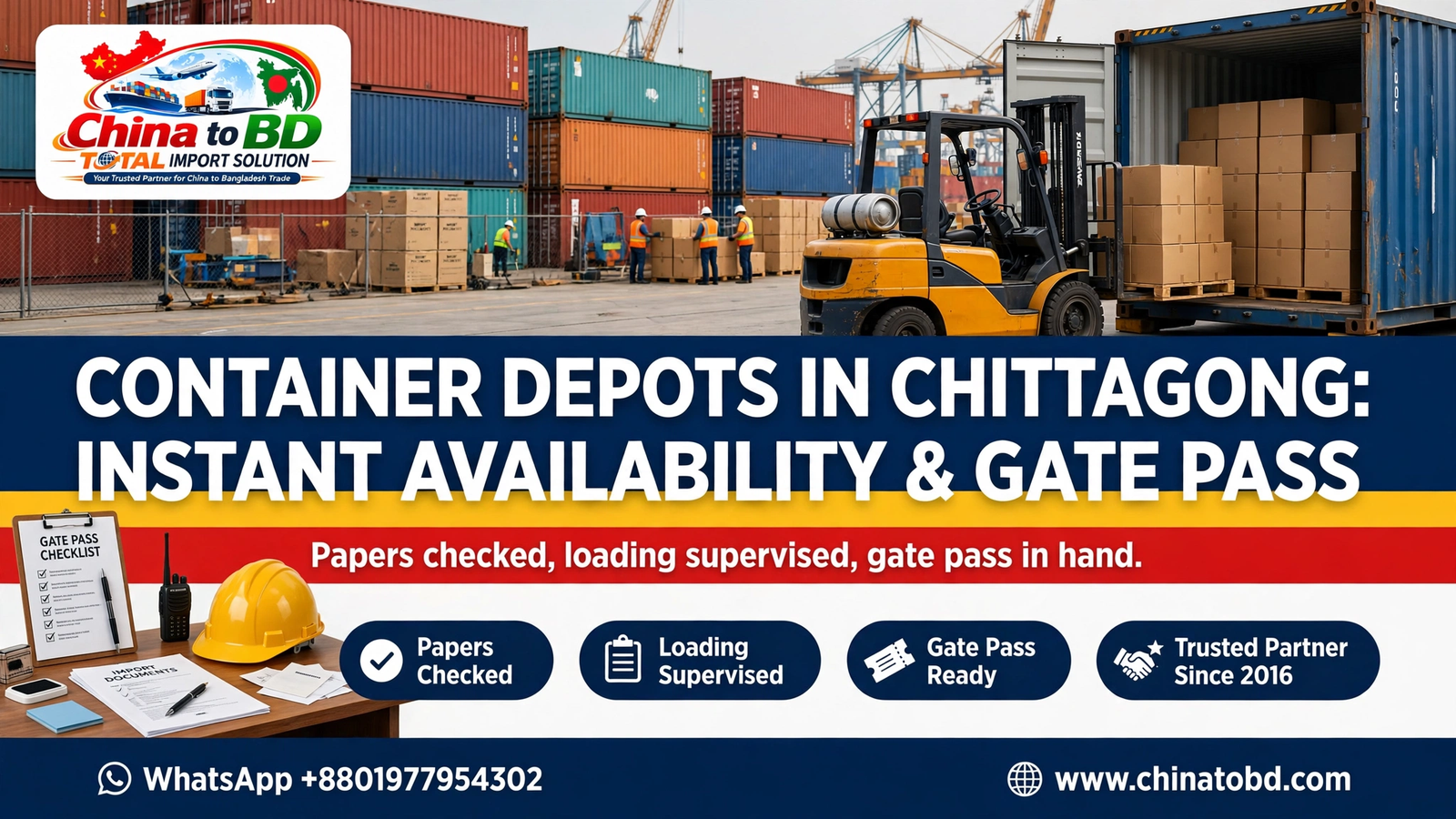
The gate is where the depot records the movement of a container, and the record is only as good as the papers presented there. The standard papers are the invoice, the packing list, the bill of lading, and the booking confirmation. Each paper has its own purpose, and together they describe the goods, the container, and the journey. The importer should know what each paper is for, so that a missing paper can be noticed before the vehicle leaves for the yard.
The invoice describes the goods and the parties to the sale, and it is the paper that the depot and the handling team use to confirm what the shipment contains. The packing list describes how the goods are packed, how many cartons there are, and what is inside each carton, and it is the paper used to check the goods as they are loaded or unloaded. The bill of lading is the transport document for the sea leg, and it links the container to the booking. The booking confirmation records the container, the route, and the agreed movement, and it is the paper that the depot checks against the other papers at the gate.
Checking the papers against each other is a small task that prevents larger problems. Compare the goods named on the invoice with the goods listed on the packing list. Compare the carton count on the packing list with the count on the booking. Check that the marks on the cartons match the marks on the papers. If a detail differs, ask the team handling the shipment to correct it before the depot visit. A correction made early takes a short call; a correction made at the gate takes the time of the vehicle, the driver, and the depot staff.
| Document or check | Purpose | Check before you go |
|---|---|---|
| Invoice | Describes the goods and the parties | Goods and parties match the other papers |
| Packing list | Describes packing, cartons, and contents | Carton count and marks match the goods |
| Bill of lading | Transport document for the sea leg | Container and booking details agree |
| Booking confirmation | Records the container, route, and movement | Dates, yard, and container details agree |
| Gate pass request | Records the container movement at the gate | Papers are complete, and the requester is named |
| Contact person and hours | Guides the driver on arrival | Depot contact, yard hours, and the meeting point |
Loading and Handling Planning at the Depot
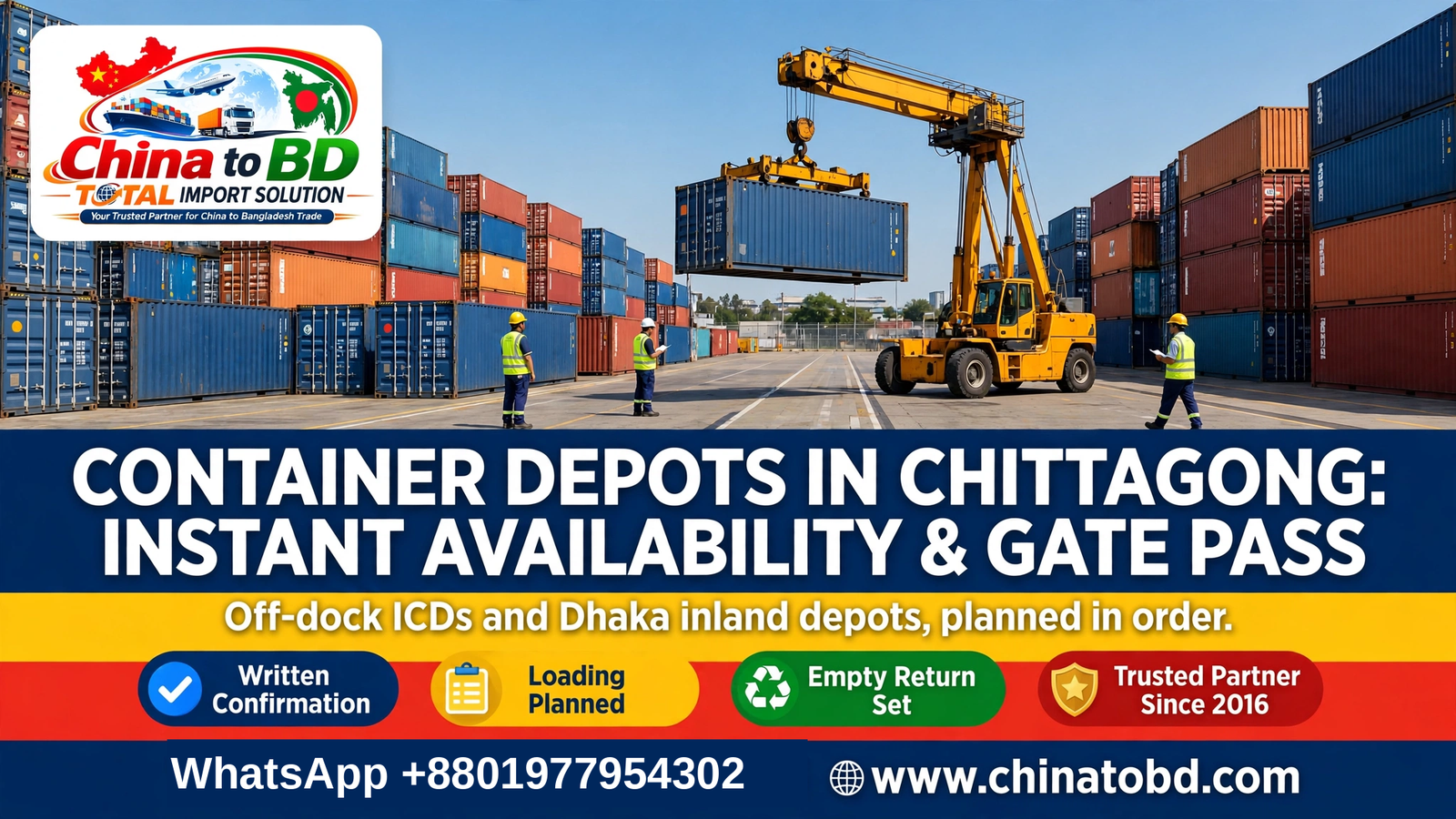
Loading is the work that turns a plan on paper into goods inside a container, and it deserves the same care as the documents and the booking. A good loading plan starts with the goods list: the product names, the packing type, the carton count, and the order in which the goods should be loaded. Goods that are needed first at the warehouse are usually loaded last, so that they come out first, while goods that are heavy or bulky are placed where they can be handled safely and where they will not press on fragile cartons.
Before loading begins, the container should be checked. Look inside for cleanliness, dryness, and any visible damage, and confirm the container size and condition with the team at the yard. If the container is not in a fit state for the goods, the concern should be raised before loading, while there is still time to ask for another container or to agree on the next step. Once goods are loaded and the doors are closed, checking the container becomes much harder, so the check before loading is the one that matters most.
During loading, supervision makes the difference between a load that travels well and a load that arrives with damage. A supervisor who checks the packing list as each carton goes in can catch a missing carton at once, rather than discovering it at the warehouse. The supervisor also watches the balance of the load, the protection of fragile goods, and the way cartons are stacked, so that the load stays steady during transport. Photographs of the loading, taken with the agreement of the yard, can serve as a record of the condition of the goods when they were loaded.
Unloading follows the same principles in reverse: the packing list is checked as cartons come out, goods are counted, and any damage is noted at once. The empty container is then checked, the return point is confirmed, and the papers for the return are prepared. For a wider view of how the whole journey is coordinated from China to Bangladesh, readers can look at China to Bangladesh Logistics Partner, which describes the role of a logistics partner across the different stages of a shipment.
What Shapes the Cost of the Depot Step
Importers often ask what the depot stage will cost, and the honest answer is that the cost depends on several factors that differ from shipment to shipment. No figure is given here, because a figure quoted without the details of the shipment would be misleading. What can be described are the factors that shape the cost, so that an importer knows what to ask about when requesting a written quotation.
The length of time a container is held at the depot is one factor. A container that is collected promptly after it becomes ready will need less holding time than one that waits while papers or transport are arranged, and holding time is part of what a depot charges for. Planning the papers, the transport, and the loading team in advance helps keep the holding time as short as the plan allows, and it also helps the importer know the dates to ask about when requesting a quotation.
Handling work is another factor. Loading and unloading, moving the container within the yard, and checking the container all involve work and equipment, and the amount of work depends on the goods, the packing, and the loading plan. A load that is well planned and clearly described can be handled in an orderly way, while a load that arrives without a plan may need extra handling. Sharing the goods list and the loading plan early helps the yard plan its work and helps the importer receive a quotation that reflects the actual work.
Transport distance is a further factor. The distance between the depot and the warehouse, the route, and the return point for the empty container all affect the transport part of the cost. A Dhaka inland depot close to the warehouse may shorten the final leg, while a Chittagong depot may suit a shipment that is collected near the port. The right choice depends on the delivery point and the plan for the empty return, and both should be discussed when the quotation is requested.
Common Mistakes to Avoid
Many depot delays come from a small number of repeated mistakes, and most of them can be avoided with early planning. The list below describes the mistakes that importers most often make, so that the reader can check the plan against them before the shipment moves.
- Arriving at the depot without confirming availability first, and finding that space is not open for the planned dates.
- Booking transport before the gate pass documents are ready, so the vehicle waits while papers are corrected.
- Sharing the plan by word of mouth only, without written confirmation that transport and the loading team can refer to.
- Loading goods into a container that has not been checked for cleanliness, dryness, and visible damage.
- Leaving the return of the empty container unplanned until after the goods have been delivered.
- Preparing the invoice, packing list, and booking with details that do not agree with each other.
- Forgetting to confirm the depot contact person, the yard hours, and the meeting point for the driver.
- Starting the depot plan only when the container has already arrived, leaving no time to correct a problem.
Pre-Shipment and Loading Checklist
Use the checklist below before the container moves. Work through it with the team handling the shipment, and confirm each item before the vehicle sets out. A checklist is only useful when it is actually used, so keep it with the shipment papers and mark each item as it is confirmed.
| Item | What to do | Confirmed |
|---|---|---|
| Depot availability | Ask the depot whether space is open for the planned dates | Written confirmation received |
| Gate pass documents | Gather invoice, packing list, bill of lading, and booking confirmation | Papers checked and agreeing |
| Container check | Confirm the container size and condition before loading | Container checked and fit for the goods |
| Transport booking | Book the vehicle with yard, date, and loading work | Transport confirmed with full details |
| Loading plan | Agree the goods list, packing type, and loading order | Plan shared with the loading team |
| Supervision | Name the person who will supervise loading and check the packing list | Supervisor named and present |
| Warehouse readiness | Confirm the warehouse can receive the goods on the planned date | Warehouse contact confirmed |
| Empty return | Confirm the return yard and the papers needed for the empty container | Return plan agreed |
Frequently Asked Questions
Q1: What is a container depot in Chittagong?
A container depot in Chittagong is a yard where containers are received, stored, checked, and handed over for the next stage of their journey. The gate is where each movement is recorded, and a gate pass is the record that allows a container to leave the yard.
Q2: How do I check whether a depot has space for my container?
Share the planned dates, the container details, and the kind of work needed with the depot, and ask whether space is open. Ask for the answer in writing, so that the confirmation can be shared with the transport provider and the loading team.
Q3: What is a gate pass and why do I need one?
A gate pass is the document that records a container leaving or entering a depot yard through the gate. It is prepared from the shipment papers, and it lets the depot keep an accurate record of every container movement.
Q4: Which documents are usually needed for a gate pass?
The standard papers are the invoice, the packing list, the bill of lading, and the booking confirmation. Each paper should agree with the others on the goods, the marks, and the counts.
Q5: Can I arrange a depot visit on the same day I call?
That depends on whether the depot can confirm space and whether the gate pass documents are ready, so it cannot be promised in advance. The safest approach is to call early, confirm availability in writing, prepare the papers, and then book transport. Early planning gives the depot time to answer and gives the importer time to adjust the plan if needed.
Q6: What is an off-dock ICD?
An off-dock inland container depot, often called an ICD, is a yard located away from the main port terminals that receives containers, stores them, and releases them for onward movement. It helps spread handling work beyond the port itself, so that containers can be processed in an orderly way before they move on to the warehouse or to the next stage.
Q7: What is the difference between a Chittagong depot and a Dhaka inland depot?
A Chittagong depot sits near the port area and handles containers soon after discharge, while a Dhaka inland depot sits closer to the warehouses and factories where goods are finally received. The Chittagong depot suits the early stage of the journey, and the Dhaka depot suits the final leg near the delivery point. The choice depends on the route and the delivery plan.
Q8: How do I plan transport from the depot to my warehouse?
Book the vehicle only after availability is confirmed and the gate pass papers are ready. Share the yard, the date, the container details, and the loading or unloading work with the transport provider, and confirm where the empty container should be returned. Clear details at booking time help the vehicle arrive at the right time and leave without avoidable waiting.
Q9: What should I check about a container before loading?
Check the inside of the container for cleanliness and dryness, look for visible damage, and confirm the container size and condition with the team at the yard. Raise any concern before goods are loaded, while there is still time to ask for another container or agree on the next step. Once the doors are closed, checking the container becomes much harder.
Q10: What happens if my container is not ready when transport arrives?
The vehicle may have to wait while the container is made ready, or return another time if the work cannot be completed. That is why availability, the gate pass papers, and the loading plan should all be confirmed before transport is booked. Confirming each step in advance reduces waiting and keeps the transport plan on track.
Q11: How are empty containers returned?
After unloading, the empty container is checked and returned to the agreed point, with papers and a record at the gate. Confirm the return yard, the papers needed, and the person who will hand over the empty container before the delivery is made. Planning the return at the same time as the delivery avoids extra calls after the goods have been received.
Q12: Can a depot help with loading and unloading?
A depot yard can provide space and handling support for loading and unloading, and the loading team works with the yard to place goods inside the container or to take them out. The importer should share the goods list, the packing type, and the loading order in advance, so that the yard and the team can plan the work and supervise it as it goes.
Q13: What should I do if my documents do not match the booking?
Do not take the papers to the gate as they are. Compare the invoice, packing list, bill of lading, and booking confirmation line by line, find the detail that differs, and ask the team handling the shipment to correct it before the vehicle sets out. A correction made early takes a short call, while a correction at the gate takes the time of the vehicle and the depot staff.
Q14: How early should I start planning the depot step?
Start as soon as the shipment dates are known. Confirming availability, gathering the papers, booking transport, and agreeing the loading plan all take time, and each step depends on the one before it. Starting early gives time to confirm space, correct a paper, or adjust the transport booking without pressure on the day of the visit.
Q15: Who can I contact for help with depot planning?
China to BD | Total Import Solution can help with depot planning as part of a shipment from China to Bangladesh. Reach the team on Helpline +8801977954302 or by email at info@chinatobd.com, and share the goods list and the planned dates when making contact.
Q16: How do I get a written quotation for my shipment?
Share the goods list with product names, packing type, carton count, loading point, warehouse in Bangladesh, and loading dates, and ask for a written quotation. The team will review the details and provide a quotation in writing. Contact details are in the section below, including WhatsApp, phone, and email.
Contact China to BD | Total Import Solution
- Brand: China to BD | Total Import Solution
- Company: Total Import Solution, since 2016
- Helpline: +8801977954302
- Email: info@chinatobd.com
- Warehouse & Office: House 38A, Mendi Dental College Road, Road 11, Dhanmondi Riverview Model Town, Dhaka 1209
- Website: www.chinatobd.com
Get a Written Quotation for Your Shipment
To receive a written quotation, share your goods list with the team: product names, packing type, carton count, loading point, warehouse in Bangladesh, and loading dates. The team will review the details and provide a quotation in writing.
Chat on WhatsApp: +8801977954302
Email: info@chinatobd.com
Container depots in Chittagong and Dhaka inland depots are a routine part of moving goods from China to Bangladesh, and they become much easier to manage when the work is planned early. Confirm the space, prepare the papers, book the transport, agree the loading plan, and plan the return of the empty container, and the depot stage will support the shipment instead of holding it up. The team at China to BD | Total Import Solution is ready to help with that planning, one shipment at a time.
About the Author